
About iStudy

Getvarsity is established and incorporated with the objective to provide a comprehensive range of Continuous Professional Development (CPD), Personnel Skill Assessment, Industrial Quality standardization, Corporate Training, and Personnel Skill Certification solutions that meet the needs of stakeholders in an ever-changing Industrial ecosystem.

Account

Follow Us

HACCP Level 3 & HACCP Level 4 Certification

This Getvarsity HACCP training aligns with & follows Codex Alimentarius Commission (CAC) guidelines and global standards like ISO 22000 and GFSI. It fulfills the mandated IIRDC learning hours for the HACCP module under TÜV SÜD’s Certification of Persons in Food Safety Practitioner/Food Safety Professional and also counts toward the IIRDC National Credit Framework (NCRF) Level 6 certification course by IIRDC in Food Safety and Quality Management Skills, if enrolled. No. 1 Best Internationally high valued HACCP Level 3 & HACCP Level 4 Certification Course

Course Highlights

    • Purpose : The primary purpose of the HACCP Level 3 and HACCP Level 4 certification courses at GetVarsity is to equip food safety professionals with the robust knowledge required to identify, assess, and control biological, chemical, and physical hazards in food production and handling. Aligned with the Codex Alimentarius Commission (CAC) guidelines, these programs are designed to foster a deep understanding of hazard analysis and risk management. By completing this internationally recognized training, professionals are empowered to ensure that food businesses comply with strict global safety standards, thereby protecting public health and maintaining absolute consumer trust in the global food supply chain.
    • Scope: The scope of GetVarsity’s HACCP training is vast, encompassing critical food safety protocols for both the manufacturing and catering sectors. The curriculum covers a wide spectrum of industries, including food processing, hospitality, retail, pharmaceuticals, and food exports. Because the certification meets elite global benchmarks such as FSSAI (India), FSMA (USA), EU Food Law, GFSI, and ISO 22000 standards, the scope of practice extends globally. Certified professionals are uniquely positioned to oversee food safety operations not only in India but across international markets, including the UAE, UK, USA, Canada, Australia, and the broader Middle East and European regions.
    • Benefits of Qualification : Achieving your HACCP Level 3 or Level 4 certification through GetVarsity offers unparalleled career acceleration and global mobility. The IIRDC-backed certification is highly valued worldwide and comes with Apostille Attestation eligibility, guaranteeing its acceptance in over 150 countries. Graduates benefit from immediate industry recognition, a QR-scannable government verification facility, and integration with India’s DigiLocker and National Academic Depository (NAD). Furthermore, this certification directly translates to increased earning potential and premium job placements. Professionals holding these credentials routinely secure lucrative roles in top-tier FMCG companies, multinational hospitality chains, and regulatory bodies worldwide, enjoying enhanced job security and a distinct competitive edge in the international job market.
    • Responsibilities of Certified Professionals : The responsibilities of certified professionals vary by their qualification level, ensuring comprehensive oversight of the food safety ecosystem. Professionals holding a HACCP Level 3 certification—such as Food Safety Supervisors, Head Chefs, and Quality Assurance Officers—are responsible for the active implementation and monitoring of HACCP plans. Their daily duties involve establishing critical limits, executing corrective actions, and maintaining meticulous food safety records. Conversely, HACCP Level 4 certified personnel operate at a senior strategic level. Technical Directors, Regulatory Experts, and Food Safety Auditors with this advanced credential take on the responsibility of designing organizational compliance frameworks, conducting internal and third-party audits, managing Corrective and Preventive Action (CAPA) systems, and driving an enterprise-wide culture of food safety.
    • Eligibility Criteria : GetVarsity has structured its eligibility criteria to accommodate professionals at various stages of their food safety careers. The HACCP Level 3 program is ideal for operational staff, including food business managers, quality control professionals, chefs, and hygiene officers who require a thorough, practical understanding of HACCP implementation. To enroll in the advanced HACCP Level 4 certification, candidates are generally expected to already possess a foundational HACCP Level 3 qualification or have a minimum of one to two years of hands-on, practical experience in managing food safety systems. This ensures that candidates are well-prepared for the rigorous, auditing-focused demands of the Level 4 curriculum.
    • Assessment Procedure : GetVarsity ensures that all certified candidates possess practical, real-world competence through a rigorous and standardized assessment procedure. The certification exam utilizes a combination of multiple-choice and complex scenario-based questions designed to test the candidate's ability to apply HACCP principles to real-life food safety challenges. Rather than focusing purely on rote memorization, the assessment evaluates hazard identification, CCP determination, and the execution of monitoring systems. Candidates must achieve a minimum passing score of 80% to earn their official Certificate of Achievement. For those who do not meet the threshold on their first attempt, GetVarsity provides supportive resit opportunities.
    • Curriculum : The curriculum for these GetVarsity programs is comprehensive, continuously updated, and designed to meet modern industry demands. The HACCP Level 3 curriculum spans 13 to 40 guided learning hours and delves deeply into the seven core HACCP principles: hazard analysis, identifying Critical Control Points (CCPs), establishing critical limits, monitoring procedures, implementing corrective actions, system verification, and diligent documentation. It also provides strong foundational knowledge in Prerequisite Programmes (PRPs) and global food safety legislation. The intensive HACCP Level 4 curriculum builds upon this foundation by introducing highly advanced modules. Learners master sophisticated HACCP auditing methodologies, enterprise risk management frameworks, crisis communication, and regulatory compliance management, ensuring they are fully equipped to lead high-level safety initiatives in any international food organization.

    • IIRDC HACCP certification is awarded upon successful completion of HACCP training based on the principles and guidelines set forth by the Codex Alimentarius Commission (CAC) and in accordance with internationally recognized food safety standards, including ISO 22000, GFSI-benchmarked schemes, and applicable regulatory requirements
    • HACCP Level 3 & 4 for Manufacturing Certification
    • HACCP Level 3 & 4 for Catering Certification
    • Comprehensive Hazard Analysis and Critical Control Point Curriculum which Meets FSSAI (India), FSMA (USA), EU Food Law, GFSI, and ISO 22000 standards
    • IIRDC High Value Personnel Skill ⁠⁠Certification Issued by Section - 8 Entity
    • Highly valued in the International job market with 150 + Countries Apostel Attestation Eligibility.
    • QR Scanning Verification to the Gov of India portal facility Available Upon Apostel Attestation.
    • Recognized in India, UAE, UK, USA, Canada, Australia, Middle East and European markets
    • IIRDC is recognised through various international ISO Standard certifications by organizations who are responsible for assessing the competence and capability of organisations.
    • Qualifies professionals for roles like HACCP Coordinator, Food Safety Auditor, Quality Assurance Manager

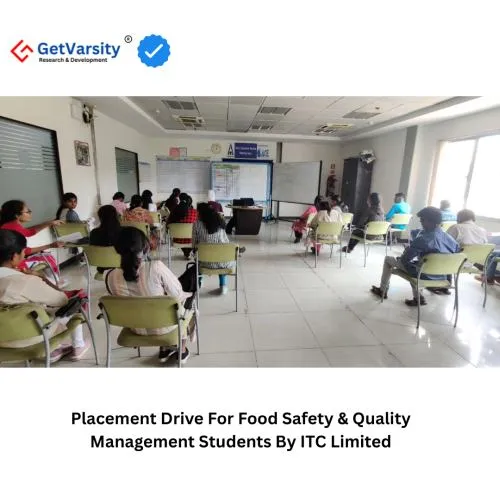
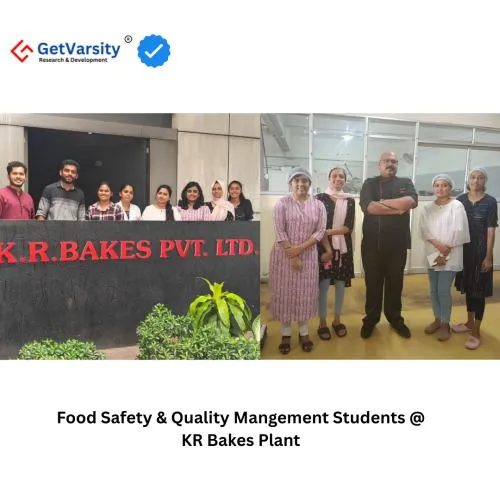
Placements & Internships

Sandra S
Arathy Manoj
Bineesh
Krishna Raj
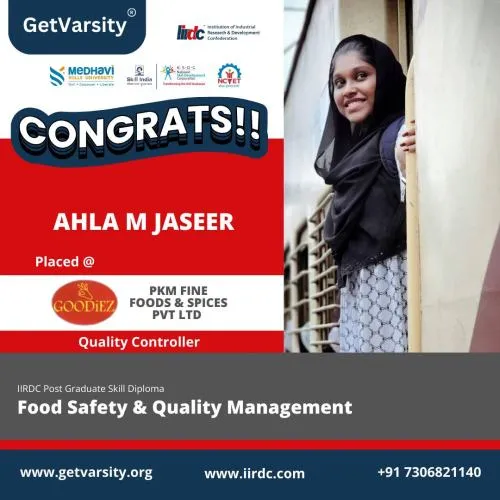
Ahla M Jaseer
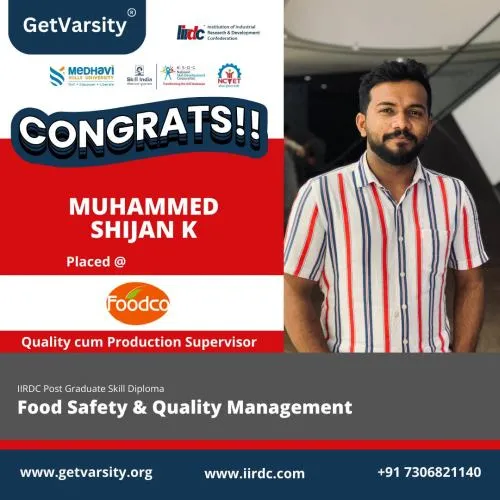
Muhammed Shijan K
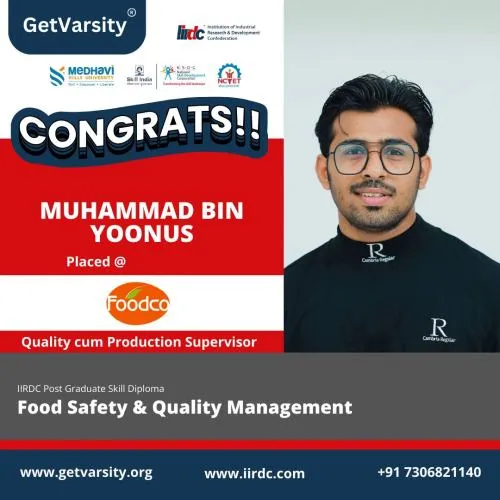
muhammed Bin Yoonus
Anaga
Anagha D
Anas

why getvarsity ?

skill india
Skill India Training Partner / Provider /
Project Management Unit (PMU)

IIRDC is an Skill India (Ministry of Skill Development &Entrepreneurship) TP which have rights to Approve, Accredit andCreate Training Centers (TC) under IIRDC and Impart NSQF, NHEQF,Non - NSQF Certification Programs. (Service Agreement Sl. No. B386880). All IIRDC TC’s would qualify as Government recognizedskill training institution status.

ncvet
NCVET Training Body

IIRDC is a Training Body having rights to Approve, Accredit and Create Training Centers under IIRDC TB of NCVET Awarding Body. Also IIRDC holds Rights of Research & Development of New Industry Anchored NSQFand NHEQF Qualifications Through AB. All confederation companiesunder IIRDC will be accredited skill centers of AB.

ugc
UGC Approved Skill University's Industry Outreach
Partner / Skill Training Partner & Service Partner

GetVarsity is a company, not a UGC-regulated HEI, and provides fee-based Skill training and institutional support, while universities handle all academic processes, including admissions, exams, and awarding degrees. GetVarsity partners with universities and industry to integrate higher education with skill development, supporting UGC-approved work-integrated, vocational, and apprenticeship-based programs aligned with NEP 2020. 

iirdc
Personnel Skill Assessment & Certification Body

IIRDC Is an Autonomus Skill Assessment and CertificationAwarding Bodyworking as per the norms under international standards forGeneralrequirements for bodies operating certification of persons.IIRDCensures that a certified candidate holds the skills andexpertise ina specialized area through systematic assessments.

TÜV SÜD
TUV SUD Germany Food Safety and Quality 1st Cooperation Partner in India

TÜV SÜD Germany is a globally trusted technical service providerwithover 150 years of legacy in quality assurance and safety.Renowned forits rigorous standards, TÜV SÜD offers comprehensive testing,inspection, auditing, and certification services tailored to the food industry. Getvarsity is an official Training center & Confederation company of IIRDC ( TÜV SÜD Cooperation Partner )

digilocker
DigiLocker Verified

All IIRDC NCrF (NHEQF / NSQF) Aligned Skill Qualification Certifications issued in association with NCVET AB will be added into DigiLocker — a platform where Government Documents like Aadhaar, PAN, and Driving License are issued and verified. Credits will also be issued in ABC verifiable through DigiLocker.

abc skill credits
Academic Bank of Credits (ABC) Body

ABC is a digital system established under the National Education Policy (NEP) to facilitate credit accumulation, transfer, and redemption across higher education institutions. It allows candidates to earn credits for completed coursework. As per the ABC framework, 30 hours of learning equate to 1 academic credit, ensuring standardized recognition of learning outcomes across institutions. All NCrF aligned courses provided by Getvarsity holds ABC Skill credits.

nad
National Academic Depository (NAD)

NAD is a platform established by the Government to securely store and verify academic awards issued. Managed by DigiLocker and integrated with the Academic Bank of Credits (ABC), it enables verified documents anytime, reducing fraud and administrative delays while supporting the goals of NEP 2020. Certificates issued for Getvarsity students, which are aligned to NCrF, is linked to NAD.

nep 2020
National Education Policy (NEP)

The National Education Policy (NEP) 2020 aims to create a flexible and integrated education system. It connects school, higher, and vocational learning through the National Credit Framework (NCrF), National Higher Education Qualification Framework (NHEQF), and National Skills Qualifications Framework (NSQF), enabling credit transfer, skill integration, and lifelong learning. Getvarsity delivers NCrF courses aligned to NEP 2020 

Frequently Asked Questions

The IIRDC HACCP Level 3 Certification Course by GetVarsity is a globally recognized training program designed for professionals in food manufacturing and catering. With a comprehensive curriculum, expert-led training, and international recognition, it is the top choice for food safety training in India, Kerala, and worldwide. Here’s why it stands out:

  • Internationally Recognized Certification – Complies with global food safety standards, making it valuable for professionals in India, the Middle East, Europe, the USA, and other regions.
  • International Verification Facility - The GetVarsity IIRDC HACCP Level 3 Certification is Eligible for Apostle Attestation, which translates to Acceptance across the globe ( 150+ Countries ), which translates the high value and strength of GetVarsity Training & Certification. QR Scanning Verification to the Gov of India portal facility Available Upon Apostel Attestation. International Online Verification of certification is also available in the certification.
  • Expert-Led Training – Delivered by industry professionals and HACCP specialists with expertise in food safety regulations across India and international markets.
  • Flexible Learning Options – Offers self-paced online courses and instructor-led training at leading centers across India, Kerala, and internationally.
  • Practical, Job-Oriented Skills – Covers hazard analysis, risk management, and HACCP implementation, preparing professionals for food safety roles in global food industries.
  • Recognized by Employers Worldwide – Enhances career opportunities in restaurants, hotels, catering services, food production, and manufacturing industries. Most of the IIRDC GetVarsity HACCP Level 3 Certified Candidates are working in Top most FMCG and Food industries in india, UK, USA, UAE, Saudi Arabia, Qatar, Australia and other European Countries.
  • Affordable and Value-Packed – Provides industry-leading HACCP training at competitive pricing, with high-quality study materials, assessments, and certification accepted globally.

With a strong reputation in International Market,India, Kerala, and international food safety sectors, the IIRDC HACCP Level 3 Course by GetVarsity is the ideal choice for professionals seeking to advance their careers in food safety and HACCP compliance. Enroll today to gain a globally respected certification and enhance your career opportunities.

The HACCP Level 3 Certification Course has a total duration of 13 to 18 hours, regardless of the learning mode. Whether you choose self-paced online training, instructor-led virtual sessions, or in-person classroom training, the course is structured to provide a comprehensive understanding of HACCP principles, hazard analysis, risk management, and critical control points (CCPs). The flexible format ensures that learners can complete the training efficiently while gaining the necessary knowledge for food safety compliance in manufacturing and catering. Recognized in India, Kerala, and globally, this certification enhances career opportunities in the food industry, hospitality sector, and regulatory agencies. Enroll today to complete your HACCP Level 3 training and boost your expertise in food safety management.

The HACCP Level 3 Certification Course provides in-depth knowledge of Hazard Analysis and Critical Control Points (HACCP), focusing on food safety management, risk assessment, and regulatory compliance. The syllabus is designed to help professionals in food manufacturing and catering implement effective food safety systems in accordance with international standards.

Key Topics Covered in HACCP Level 3 Training:

  • Introduction to HACCP – Understanding the principles, history, and importance of HACCP in food safety.
  • Food Safety Hazards – Biological, chemical, and physical hazards that impact food production and handling.
  • Legal and Regulatory Requirements – Compliance with national and international food safety laws (including FSSAI in India).
  • The 7 Principles of HACCP – Step-by-step guidance on implementing HACCP in food manufacturing and catering.
  • Hazard Analysis and Risk Assessment – Identifying critical control points (CCPs) to prevent contamination.
  • Developing and Implementing HACCP Plans – Designing a structured plan for food safety management.
  • Monitoring, Verification, and Validation – Ensuring HACCP systems are effectively applied and maintained.
  • Record-Keeping and Documentation – Best practices for maintaining food safety records and audits.


The HACCP Level 3 course is available in internationally across countries, India and Kerala, offering a recognized certification for professionals in the food industry, hospitality sector, and regulatory bodies. By completing this training, you will gain essential skills to ensure safe food production, compliance, and industry best practices. Enroll now to master HACCP principles and enhance your career in food safety.

Who Should Attend HACCP Level 3 Training and Certification?
The HACCP Level 3 Training and Certification is essential for professionals involved in food safety, manufacturing, and catering. It is designed for individuals responsible for implementing and managing Hazard Analysis and Critical Control Points (HACCP) systems in food-related businesses.

Ideal Candidates for HACCP Level 3 Certification:

  • Food Business Owners & Managers – Ensures compliance with food safety regulations and enhances business credibility.
  • Quality Control & Assurance Professionals – Helps in maintaining high food safety standards in manufacturing and catering.
  • Food Safety Supervisors & Hygiene Officers – Essential for those overseeing HACCP implementation and regulatory compliance.
  • Chefs & Kitchen Staff in Catering & Hospitality – Important for those handling food preparation and ensuring hygiene.
  • Food Production & Processing Staff – Critical for those involved in food packaging, processing, and manufacturing.
  • Health & Safety Officers – Ensures workplace compliance with HACCP food safety regulations.
  • Regulatory & Compliance Professionals – Helps in understanding global food safety laws and HACCP principles.
  • Anyone Seeking a Career in Food Safety – Valuable for individuals looking to work in India, Kerala, or international food industries.


This certification is highly beneficial for professionals in restaurants, hotels, catering services, food production, and food supply chains. Whether you work in India, Kerala, the UAE, the UK, or any global food industry, HACCP Level 3 training will enhance your career and ensure compliance with international food safety standards. Enroll today to advance your expertise in HACCP and food safety.

Career Opportunities After HACCP Level 3 Certification?
Completing the HACCP Level 3 Certification opens doors to high-demand career opportunities in the food manufacturing, catering, and hospitality industries. This internationally recognized certification ensures compliance with global food safety standards, making you a valuable asset in India, Kerala, the UAE, Europe, the USA, and other international markets.

Job Roles After HACCP Level 3 Certification

  • Food Safety Officer – Ensure food hygiene and safety compliance in manufacturing and catering industries.
  • Quality Assurance Manager – Oversee food quality control, risk assessment, and HACCP implementation.
  • HACCP Coordinator – Develop, monitor, and update HACCP plans in food production facilities.
  • Compliance Officer – Ensure adherence to national and international food safety regulations.
  • Food Production Supervisor – Manage food processing operations with HACCP guidelines.
  • Catering Manager – Implement food safety protocols in hospitality and catering businesses.
  • Restaurant Quality Manager – Maintain high safety and hygiene standards in food service operations.


Industries Hiring HACCP Level 3 Certified Professionals

  • Food Manufacturing & Processing Units
  • Restaurants, Hotels & Catering Services
  • Packaged Food & Beverage Companies
  • Dairy & Meat Processing Plants
  • Supermarkets & Retail Chains
  • Food Safety Regulatory Agencies

With growing demand for HACCP-certified professionals in India and globally, completing HACCP Level 3 enhances your career prospects and salary potential. Enroll today and take the next step toward a rewarding career in food safety and quality assurance.

  • Awarded as IIRDC's Best Center For Skill Excellence in India. 
  • NCVET Awarding Bodies empaneled Skill India (Skill India - Ministry of Skill Development and Entrepreneurship) Approved Training Center (TC) Under IIRDC Training body (TB &TP).
  • Industry Outreach Partner, Service Partner, &Vocational Training partner of multiple UGC, NSDC and NCVET recognized Skill Universities.
  • Special Right to develop and implement NHEQF, NSQF programs with Digi locker ABC credits through IIRDC.
  • Accredited by ISO and International bodies of UK, USA, UAE, Egypt, European countries, Etc.
  • Gov Skill Loan, Educational & IIRDC GST Exemptions.

What Does a HACCP Level 3 Professional Do?
A HACCP Level 3 professional plays a critical role in food safety management by ensuring compliance with Hazard Analysis and Critical Control Points (HACCP) regulations in food manufacturing, catering, and hospitality industries. Their primary responsibilities include:

  • Developing and Implementing HACCP Plans – Identifying potential food safety hazards and establishing control measures to minimize risks.
  • Monitoring Food Safety Compliance – Ensuring that all food handling, preparation, and storage processes follow local and international food safety standards.
  • Conducting Risk Assessments – Evaluating potential contamination risks in food production and taking preventive measures.
  • Training and Supervising Staff – Educating food handlers, chefs, and manufacturing staff on HACCP principles and best practices.
  • Performing Internal Audits and Inspections – Reviewing HACCP documentation, conducting audits, and ensuring regulatory compliance.
  • Ensuring Regulatory Compliance – Keeping up with global food safety laws and industry regulations in countries such as India, the UK, the UAE, and the USA.


A HACCP Level 3 professional is essential for food businesses, restaurants, catering services, and manufacturing units that aim to maintain high food safety standards and meet global compliance requirements. If you want to advance your career in food safety management, obtaining a HACCP Level 3 certification can open up job opportunities worldwide.

The salary after completing an HACCP Level 3 Certification varies based on factors such as location, industry, experience, and job role. In India, entry-level positions such as Quality Control Officer, Food Safety Supervisor, or HACCP Coordinator typically offer salaries ranging from three to six lakh per annum, while mid-level roles like Food Safety Manager or Compliance Officer can earn between six to twelve lakh per annum. Senior positions such as QA Manager, Regulatory Affairs Specialist, or Food Safety Auditor can command salaries of twelve to twenty lakh per annum or more. Internationally, salaries are even more competitive, with HACCP-certified professionals earning twenty-five thousand to fifty thousand per year in the Middle East, thirty-five thousand to seventy thousand in Europe, forty thousand to eighty thousand in the USA and Canada, and fifty thousand to ninety thousand in Australia and New Zealand. Salaries are influenced by the industry, with higher pay scales in multinational food processing companies, hotels, and pharmaceutical sectors. Additionally, professionals with two or more years of experience and certifications in ISO 22000, FSSC, and Food Safety Auditing have a higher earning potential. With increasing global demand for food safety experts, an HACCP Level 3 Certification provides excellent career growth opportunities in India and internationally.

Why is HACCP Level 3 Certification Essential for a Global Food Safety Career? : HACCP Level 3 Certification is essential for professionals seeking global career opportunities in food safety, manufacturing, and catering. This internationally recognized certification ensures compliance with global food safety regulations, including FSMA (USA), FSSAI (India), EU Food Law (Europe), and GFSI Standards. With increasing food safety regulations worldwide, HACCP-trained professionals are in high demand across India, the Middle East, Europe, the USA, Canada, and Australia.

Completing an HACCP Level 3 course enhances career prospects by qualifying individuals for high-paying roles such as Food Safety Officer, Quality Assurance Manager, HACCP Coordinator, and Regulatory Compliance Specialist. The salary potential ranges from three to twenty lakh per annum in India and twenty-five thousand to ninety thousand per year internationally, depending on experience, location, and industry.

This certification is particularly valuable in industries such as food production, hospitality, pharmaceuticals, and food exports, where compliance with HACCP principles is mandatory. By enrolling in an HACCP Level 3 training program accredited by globally recognized bodies, professionals gain the expertise to implement effective food safety management systems, prevent contamination risks, and ensure regulatory compliance. Whether you are looking to advance your career in India or secure international job opportunities, obtaining an HACCP Level 3 Certification is a crucial step toward success.

What Are the Benefits of HACCP Level 3 Certification for Career Growth in India and Globally?
HACCP Level 3 Certification is a game-changer for professionals looking to advance their careers in food safety, manufacturing, and catering. With global food safety regulations becoming stricter, this certification is essential for roles such as Food Safety Officer, HACCP Coordinator, Quality Assurance Manager, and Regulatory Compliance Specialist. In India, salaries range from three to twenty lakh per annum, while internationally, professionals can earn twenty-five thousand to ninety thousand per year.

GetVarsity offers the best HACCP Level 3 training in India, providing internationally recognized certification that meets FSSAI, FSMA (USA), EU Food Law, and GFSI standards. Our course ensures career growth, higher salaries, and international job opportunities in industries like food processing, pharmaceuticals, and hospitality. Enroll with GetVarsity to gain globally competitive expertise and secure high-paying roles in India and abroad.

Is HACCP Level 3 Certification Mandatory for Food Safety Professionals?
While HACCP Level 3 Certification is not legally mandatory in all industries, it is highly recommended and often required by top food companies, catering businesses, and regulatory authorities worldwide. In India, FSSAI encourages HACCP compliance, and internationally, it is required under FSMA (USA), EU Food Law, and GFSI standards. GetVarsity’s IIRDC HACCP Level 3 Certification ensures you meet these standards, making you a preferred candidate for food safety roles in India, the UAE, the UK, the USA, Canada, and Australia. Our industry-focused training prepares professionals to implement HACCP principles effectively, increasing their job security and career advancement opportunities.

What Is the Difference Between HACCP Level 3 and HACCP Level 4?: HACCP Level 3 is perfect for professionals responsible for food safety implementation, such as supervisors, quality assurance officers, and food safety managers. It covers hazard analysis, risk management, and food safety compliance. HACCP Level 4, however, is an advanced qualification designed for senior managers, food safety auditors, and regulatory experts who oversee compliance at an organizational level. At GetVarsity, we offer both HACCP Level 3 and Level 4 training, ensuring professionals at all levels can gain industry-recognized expertise to meet global food safety standards.

Which Industries Benefit from HACCP Level 3 Certification?: HACCP Level 3 Certification is critical for professionals in food manufacturing, catering, hospitality, pharmaceuticals, and exports. It is recognized globally and is particularly valuable for those looking to work in India, the UAE, Saudi Arabia, the UK, the USA, Canada, Australia, and Europe. GetVarsity’s industry-aligned HACCP training ensures professionals gain practical skills and real-world knowledge, making them highly sought-after in the global food industry.

Is Online or Offline HACCP Level 3 Certification from GetVarsity Recognized in India and Abroad?: Yes! GetVarsity’s online or Offline HACCP Level 3 Certification is widely accepted in India and internationally. Our program meets FSSAI, FSMA, GFSI, and ISO 22000 standards, ensuring professionals can work in food processing, catering, and regulatory roles worldwide. Our interactive online platform, expert trainers, and globally recognised certification make GetVarsity the best choice for HACCP training in India.

How Does HACCP Level 3 Certification Benefit Food Businesses?: For businesses in food manufacturing, catering, and hospitality, HACCP Level 3 Certification is essential for ensuring regulatory compliance, preventing food safety risks, and building consumer trust. A trained workforce helps companies maintain quality control, meet legal requirements, and secure global food safety certifications like ISO 22000 and FSSC 22000. GetVarsity offers customized HACCP training for businesses, ensuring compliance with Indian and international food safety laws, reducing risks, and improving operational efficiency.

Can HACCP Level 3 Certification from GetVarsity Help in Getting a Job Abroad?: Absolutely! HACCP Level 3 Certification is highly valued in the UAE, Saudi Arabia, Canada, the UK, the USA, and Australia, where food safety regulations are stringent. GetVarsity’s certification enhances job prospects, increases salary potential, and qualifies professionals for international food safety roles. Many multinational companies prioritize candidates with HACCP Level 3 certification from recognized providers like GetVarsity.

Where Can I Enroll for HACCP Level 3 Certification in India and Internationally? For the best HACCP Level 3 training in India, enroll with GetVarsity. We offer comprehensive online and classroom training that is internationally recognized, covering all aspects of food safety management, risk assessment, and HACCP implementation. Our program is designed to help professionals secure high-paying jobs in India and abroad while meeting global food safety standards. Join GetVarsity today and take the next step in your food safety career with industry-leading HACCP Level 3 Certification!

HACCP (Hazard Analysis and Critical Control Points) certification is an internationally recognised food safety credential that validates a professional's ability to identify, assess, and control biological, chemical, and physical hazards in food production and handling. It is the cornerstone framework underpinning global food safety standards including ISO 22000, FSSC 22000, and BRC Global Standards. For food safety professionals, obtaining HACCP certification demonstrates verified competence to employers, regulatory bodies, and auditors across the food manufacturing, hospitality, retail, and catering sectors. In many jurisdictions and large food organisations, holding an active HACCP qualification is a mandatory requirement for supervisory and management roles.

HACCP Level 3 and Level 4 serve different roles in the food safety career ladder. Level 3 is designed for food safety supervisors, team leaders, head chefs, and quality assurance officers responsible for developing, implementing, and monitoring HACCP plans within their workplace. Level 4 is an advanced qualification aimed at senior food safety managers, technical directors, HACCP auditors, and consultants who are responsible for auditing HACCP systems, overseeing compliance across an organisation, and training others. If you manage a HACCP plan day-to-day, Level 3 is your entry point. If you audit or lead HACCP strategy at a senior or corporate level, Level 4 is the appropriate qualification.

HACCP Level 3 is ideal for Freshers and food industry professionals who are responsible for food safety at a supervisory or management level. This includes food production supervisors, quality assurance officers, head chefs, catering managers, food retail managers, HACCP team members, and anyone involved in constructing or maintaining a HACCP plan. It is also highly recommended for professionals seeking international roles in food safety, particularly in markets such as the UAE, UK, USA, Canada, and Australia, where Level 3 HACCP is commonly listed as a minimum requirement in food safety job descriptions. Prior knowledge of basic food hygiene (Level 2) is beneficial but not always mandatory.

HACCP Level 4 is designed for experienced food safety professionals operating at a senior or strategic level. Ideal candidates include Food Safety Managers, Technical Managers, HACCP Team Leaders, Regulatory Compliance Officers, Quality Directors, and food safety consultants who conduct internal or third-party HACCP audits. Many large food manufacturers, international hospitality groups, and government food regulatory bodies require Level 4 certification for senior appointments. Candidates are typically expected to already hold a HACCP Level 3 qualification, or to have at least one to two years of hands-on experience managing food safety systems before enrolling in the Level 4 program.

HACCP Level 3 typically requires between 13 to 40 guided learning hours, which can be completed over a few days in an instructor-led format or across several weeks through online self-paced study. HACCP Level 4 is a more intensive qualification requiring additional study time to cover advanced auditing methodologies, documentation systems, and compliance frameworks. Both certifications are structured to accommodate working professionals, with flexible online delivery allowing learners to study around existing job commitments. The exact duration may vary based on your prior food safety knowledge and the learning format you choose at the time of enrolment.

HACCP Level 3 covers the seven HACCP principles in depth: hazard analysis, identifying critical control points (CCPs), establishing critical limits, monitoring procedures, corrective actions, verification, and documentation. It also addresses prerequisite programmes (PRPs), food safety legislation, and HACCP plan development. HACCP Level 4 builds on this with advanced modules including HACCP auditing techniques, risk management frameworks, corrective and preventive action (CAPA) systems, regulatory compliance management, crisis communication, and leadership in food safety culture. Both levels integrate real-world food industry scenarios to ensure practical application of theoretical knowledge.

The HACCP certification assessment typically combines multiple-choice questions and scenario-based questions that test your ability to apply HACCP principles in real food safety situations. A minimum score of 80% is generally required to pass and receive the Certificate of Achievement. The exam is designed to test practical understanding rather than rote memorisation, with questions covering hazard identification, CCP determination, critical limits, monitoring systems, and corrective actions. Candidates who do not meet the pass mark on their first attempt are usually offered a resit opportunity. Results and certificates are typically issued within a short period after successful completion.

Yes, HACCP Level 3 and Level 4 certifications from accredited bodies are widely recognised across the global food industry. The HACCP system itself is mandated or referenced in food safety legislation in the United States (FDA FSMA), the European Union, the United Kingdom, Canada, Australia, the UAE, and numerous other jurisdictions. GetVarsity's HACCP certifications are backed by IIRDC accreditation, making them accepted credentials for food safety roles across India, the UAE, UK, USA, Canada, and Australia. When selecting a course, always confirm that the certifying body is recognised by relevant national and international food safety authorities in your target market.

A HACCP Level 3 or Level 4 Certificate of Achievement is typically valid for three years from the date of issue. Renewal is recommended to ensure you remain up to date with evolving food safety legislation, updated Codex Alimentarius guidelines, and changes to international food safety standards such as ISO 22000 and FSSC 22000. Many employers and food safety auditors also require evidence of current, in-date certifications during compliance audits and contract renewals. Refresher or recertification courses are generally shorter in duration than the original qualification, allowing professionals to revalidate their credentials efficiently without repeating the full program.

Holding a HACCP Level 3 or Level 4 certification significantly improves career prospects and earning potential in the food industry. Level 3 qualified professionals commonly progress into roles such as HACCP Coordinator, Quality Assurance Officer, Food Safety Supervisor, and Production Manager. Level 4 opens doors to senior appointments including Food Safety Manager, Technical Director, HACCP Auditor, Regulatory Compliance Officer, and Food Safety Consultant. HACCP-certified professionals are in high demand across food manufacturing, retail, hospitality, government food regulatory bodies, and third-party certification agencies worldwide. Organisations operating under BRC, FSSC 22000, or SQF certification schemes frequently require HACCP qualifications as a prerequisite for key food safety personnel.

HACCP (Hazard Analysis and Critical Control Points) certification is an internationally recognised food safety management credential that validates a professional's competency in identifying, evaluating, and controlling food safety hazards. Developed from the Codex Alimentarius Commission (a joint WHO/FAO body), HACCP is a systematic preventive approach that addresses biological, chemical, and physical hazards through 7 core principles and 12 implementation steps. HACCP certification is available at multiple levels — Level 3 (Intermediate) for supervisors and team leaders, and Level 4 (Advanced) for managers and auditors.It is mandated in India under FSSAI Schedule 4 and required for food exports worldwide. At GetVarsity, HACCP certification is NCVET Awarding Body recognised, TUV SUD approved for Learning hour in TUV SUD Food Safety and Professional course, ISO 22000-aligned and IIRDC NCrF-aligned, meaning it carries both national and international validity.


The 7 principles of HACCP, as established by the Codex Alimentarius Commission, are: Principle 1: Conduct a Hazard Analysis — identify all biological, chemical, and physical hazards at each step of the food production process. Principle 2: Determine Critical Control Points (CCPs) — identify points where control is essential to prevent or eliminate hazards. Principle 3: Establish Critical Limits — set maximum/minimum values for each CCP (e.g., cooking temperature must reach ≥75°C for ≥15 seconds). Principle 4: Establish Monitoring Procedures — determine how and when to measure each CCP. Principle 5: Establish Corrective Actions — define what happens when a CCP deviation is detected. Principle 6: Establish Verification Procedures — confirm the HACCP plan is working as intended. Principle 7: Establish Documentation and Record-Keeping — maintain comprehensive HACCP records. They are defined in Codex Alimentarius CAC/RCP 1-1969 (Rev 2020). GetVarsity's HACCP Level 3 & 4 training covers all 7 principles with hands-on exercises and real-world case studies.

HACCP Level 3 (Intermediate/Supervisory) is designed for food safety supervisors, quality technicians, and team leaders who implement and maintain HACCP systems on a day-to-day basis. It covers hazard identification, CCP determination, monitoring procedures, and corrective actions at the operational level. HACCP Level 4 (Advanced/Management) is for senior managers, quality heads, and auditors responsible for designing, managing, validating, and auditing complete HACCP systems from scratch. Level 4 additionally covers: HACCP plan development, team management, validation vs. verification, internal auditing techniques, and continuous improvement methodology. Key difference: Level 3 teaches you to operate a HACCP system; Level 4 teaches you to build, manage, and audit one. GetVarsity uniquely offers both Level 3 AND Level 4 in a single programme, qualifying graduates for roles from shop-floor supervision to senior auditing.

The 12 steps of HACCP implementation (as per Codex Alimentarius) are: Step 1: Assemble the HACCP team with relevant expertise. Step 2: Describe the product (ingredients, composition, processing, distribution). Step 3: Identify the intended use and target consumers. Step 4: Construct a process flow diagram. Step 5: On-site verification of the flow diagram. Steps 6-12 correspond to the 7 HACCP principles: Step 6: Conduct hazard analysis (Principle 1). Step 7: Determine CCPs (Principle 2). Step 8: Establish critical limits (Principle 3). Step 9: Establish monitoring system (Principle 4). Step 10: Establish corrective actions (Principle 5). Step 11: Establish verification procedures (Principle 6). Step 12: Establish documentation and records (Principle 7). Steps 1-5 are the preliminary steps; Steps 6-12 are the core HACCP principles. GetVarsity's HACCP Level 4 training provides hands-on practice in executing all 12 steps.


HACCP is a set of 7 principles and 12 steps focused specifically on identifying and controlling food safety hazards during production. It is a methodology, not a certifiable standard. ISO 22000 is a comprehensive international management system standard that incorporates HACCP principles within a broader framework including management responsibility, resource management, planning, prerequisite programmes (PRPs), communication, and continual improvement. Think of it this way: HACCP is the engine; ISO 22000 is the entire vehicle. ISO 22000 requires a functional HACCP plan but adds management system elements similar to ISO 9001. GetVarsity's HACCP Level 3 & 4 certification trains you in the core HACCP principles, while the PG Diploma in Food Safety & Quality Management covers both HACCP and ISO 22000 comprehensively.

While HACCP certification for individuals is not legally mandatory, HACCP-based food safety systems are effectively mandatory for most food businesses in India. Under the Food Safety and Standards Act, 2006, FSSAI requires all food businesses to implement food safety management systems based on HACCP principles. Specifically: (1) FBOs with FSSAI Central or State licences must have at least one trained FoSTaC-certified Food Safety Supervisor, (2) food exporters must have HACCP certification to meet importing country requirements, (3) large food manufacturers (turnover >INR12 crore) must implement Schedule IV of FSS Act which is HACCP-based, and (4) FSSAI's Eat Right India initiative actively promotes HACCP adoption. Having HACCP Level 3 or Level 4 certification from GetVarsity makes you the qualified person every food business needs to comply with these requirements

HACCP personal certification (the certificate you receive after training) does not have a mandatory legal expiration date — there is no FDA/FSSAI regulation requiring renewal at fixed intervals. However, industry best practice recommends refresher training every 3 years to stay current with evolving food safety standards, regulatory updates, and new hazard categories. Many employers, auditors, and certification bodies (Bureau Veritas, SGS, TUV SUD) require that HACCP-trained personnel demonstrate recent training. GetVarsity's HACCP Level 3 & Level 4 certificates from IIRDC are lifetime valid in terms of credential recognition, though we recommend upgrading skills periodically. Note: business HACCP certification (site-specific) typically requires annual surveillance audits.

These are two distinct concepts often confused: Personal HACCP training/certification (what GetVarsity offers) validates that an individual has the knowledge and skills to develop, implement, and manage HACCP systems. You receive a personal certificate after completing the course and assessment. Business HACCP certification is when a company or facility is audited and certified by a third-party certification body (like SGS, Bureau Veritas, or TUV SUD) to confirm that their food safety management system meets HACCP requirements. Having a team member with personal HACCP certification (especially Level 4) is typically a prerequisite for obtaining business HACCP certification. GetVarsity's training prepares you to lead your company through the business certification process.

Prerequisite Programmes (PRPs) are the foundational food safety and hygiene conditions that must be in place before a HACCP system can be effectively implemented. They include: Good Manufacturing Practices (GMP) — facility design, equipment maintenance, production controls; Good Hygiene Practices (GHP) — personal hygiene, cleaning and sanitation, pest control, water quality, waste management; Standard Operating Procedures (SOPs) — documented procedures for critical operations; Supplier quality assurance — approved supplier lists and incoming material controls; Allergen management — preventing cross-contact; and Traceability systems — lot tracking and recall capability. Without solid PRPs, a HACCP plan cannot function effectively — they form the foundation upon which HACCP is built. GetVarsity's HACCP training covers both PRPs and the HACCP system itself.


The Codex Alimentarius (Latin for "Food Code") is a collection of internationally adopted food standards, guidelines, and codes of practice developed by the Codex Alimentarius Commission (CAC) — a joint body of the WHO (World Health Organization) and FAO (Food and Agriculture Organization) of the United Nations. The HACCP system as we know it today was formally codified in the Codex Alimentarius "General Principles of Food Hygiene" (CXC 1-1969, revised 2020). This document defines the 7 HACCP principles and 12 implementation steps that are the global standard. Codex standards serve as the reference point for the WTO (World Trade Organization) in food trade disputes, making them legally significant in international commerce. GetVarsity's HACCP training is fully aligned with Codex Alimentarius guidelines.

Yes. GetVarsity's HACCP Level 3 & Level 4 certification carries international recognition through multiple channels: (1) GetVarsity is a TUV SUD-approved training centre under IIRDC Confederation — TUV SUD is a globally recognised German certification body operating in over 50 countries; (2) the training is aligned with Codex Alimentarius HACCP guidelines, the universal international standard; (3) GetVarsity holds ISO/IEC 17024:2012 (personnel certification), ISO 21001:2018, ISO 9001:2015, and ISO 29993:2017 certifications; (4) the IIRDC NCrF framework aligns with international qualification benchmarks. GetVarsity graduates have successfully found employment in the UAE, Saudi Arabia, Qatar, Oman, Singapore, Malaysia, and other countries where HACCP qualification is valued.

Both are internationally recognised HACCP certifications, but with key differences: GetVarsity (IIRDC/NCVET) offers NCVET Awarding Body recognition with IIRDC NCrF/NHEQF credit alignment when a candidate do it along with NCRF aligned PG Diploma in Food Safety and Quality management course, meaning your credits are deposited in India's Academic Bank of Credits (ABC) and verified on DigiLocker and Skill India portal — this is unique to NCVET-recognised bodies. It also comes with TUV SUD approval for learning hours with adds to the hours of TUV SUD Certified Food safety professional course if enrolled. Highfield (HABC) is a UK-based awarding body with strong recognition in the UK and Middle East but does not align with India's NCRF framework and credits are not deposited in ABC. GetVarsity additionally provides 100% placement assistance, both Level 3 AND Level 4 combined, and flexible online/offline modes. For professionals targeting careers in India and the Gulf, GetVarsity's IIRDC recognition offers broader employability.

GetVarsity's HACCP Level 3 certification course has a total duration of approximately 13-18 hours, while HACCP Level 4 requires additional 16-20 hours of training. The combined Level 3 + Level 4 programme is available in three flexible formats: (1) Self-paced online — complete at your own speed within a set window, ideal for working professionals; (2) Instructor-led virtual classroom — live sessions over 3-5 days; (3) In-person classroom at GetVarsity's Kochi campus — intensive 3-5 day programme. Weekend batches are also available for professionals who cannot take weekday time off.

Yes. GetVarsity offers HACCP Level 3 & Level 4 certification through a fully online mode that includes live virtual classes, recorded lectures, digital study materials, online assessments, and virtual practical demonstrations. The online HACCP programme is available to students anywhere in India and internationally — students from Kerala, Tamil Nadu, Karnataka, Maharashtra, Delhi, and abroad regularly enrol. The online certificate carries the same recognition and validity as the in-person certificate — both are IIRDC recognised, and Learing hours is TUV SUD approved for TUV SUD Certified Food safety professional certification.

GetVarsity offers competitive and transparent pricing for HACCP Level 3 & Level 4 certification. The fee covers: complete training (Level 3 + Level 4), study materials, examination fees, IIRDC certification, TUV SUD-approved certificate, and 100% placement assistance. Compared to international certification bodies like LRQA or SGS, GetVarsity offers exceptional value by combining both levels in one programme with additional benefits. Flexible EMI payment options are available. Contact the admissions team at +91-7306136806 for current fee details.

HACCP Level 3 & Level 4 training is designed for: Food industry professionals — quality control executives, production supervisors, food safety officers; Hospitality professionals — hotel/restaurant managers, executive chefs, catering managers; Fresh graduates — B.Sc. Food Technology, Microbiology, Chemistry, Agriculture, or any science stream seeking food safety careers; FSSAI aspirants — candidates preparing for Food Safety Officer examinations; Food business owners — restaurant, bakery, and food manufacturing entrepreneurs; Exporters — food export companies needing HACCP-trained personnel; Auditors — professionals seeking to become food safety auditors; Consultants — independent food safety consultants seeking formal certification. There are no strict prerequisite qualifications — any graduate or working professional can enrol.

NCVET (National Council for Vocational Education and Training) is India's apex regulatory body for skill qualifications, established under the Ministry of Skill Development and Entrepreneurship. GetVarsity is an NCVET Awarding Body-recognised Training Centre, which means: (1) your HACCP certificate Learning hours carries government-recognised credentialing if enrolled for PG Diploma in Food Safety and Quality management course aligned to NCRF, (2) skill credits are aligned with IIRDC NCrF (National Credit Framework) and NHEQF if enrolled for PG Diploma in Food Safety and Quality management course aligned to NCRF, (3) credits are deposited in Academic Bank of Credits (ABC) — transferable to academic institutions if enrolled for PG Diploma in Food Safety and Quality management course aligned to NCRF, (4) PG Diploma in Food Safety and Quality management course certificates are uploaded to DigiLocker and verifiable on Skill India portal, (5) the qualification is recognised for government / Private / International employment where skill / Knowledge / Personnel qualifications are accepted. Many competitors offer HACCP training but without recognition, meaning their certificates don't carry government validation or credit transferability.

Yes. GetVarsity offers a clear progression pathway: HACCP Level 3 & 4 → PG Diploma in Food Safety & Quality Management (PGDFSQM) → M.Voc in Food Safety. Since your HACCP certification is IIRDC aligned, the learning hours can be transferred toward the PG Diploma programme. This means your HACCP training counts as credit toward the higher qualification, reducing additional study time. The PGDFSQM additionally covers ISO 22000, FSSAI FoSTaC, VACCP, TACCP, and food microbiology — significantly expanding your career scope.

Yes. GetVarsity's HACCP certification includes a formal assessment to validate your understanding. HACCP Level 3 assessment typically includes multiple-choice questions, hazard identification exercises, and CCP determination scenarios. HACCP Level 4 assessment includes HACCP plan development, case study analysis, audit scenario exercises, and critical thinking questions. Assessments are conducted online or at the campus and are designed to test practical application, not just theoretical recall. The pass mark is achievable for candidates who engage with the training material — GetVarsity provides adequate preparation and support to help students succeed.

Yes. GetVarsity offers customised corporate HACCP training programmes for food companies, hotel chains, restaurant groups, catering companies, and food manufacturing units. Corporate training can be delivered on-site at your facility, at GetVarsity's Kochi campus, or virtually. Group training benefits include: customised curriculum aligned with your specific food products and processes, flexible scheduling, bulk pricing, company-specific case studies, and post-training support. Contact +91-7306136806 for corporate training enquiries.

HACCP-certified professionals in India earn competitive salaries that increase significantly with experience and certification level. Entry-level (0-2 years): QC Executive, Food Safety Associate — INR 2.0–3.5 lakh/year. Mid-level (2-5 years): HACCP Coordinator, Food Safety Supervisor, QA Manager — INR 3.5–7.0 lakh/year. Senior-level (5+ years): Food Safety Auditor, Quality Head, HACCP Consultant — INR 7.0–15.0 lakh/year. HACCP Trainers earn INR 4.0–8.0 lakh/year, while independent HACCP Consultants earn INR 5.0–15.0+ lakh/year. Internationally: HACCP professionals earn $50,000–$90,000/year in the US/UK/Europe, and AED 4,000–10,000/month (INR 90,000–2,25,000/month) in Gulf countries. Level 4 holders consistently earn 30-50% more than Level 3 only holders.

HACCP certification opens diverse career paths: Quality Control Executive/Manager — in food manufacturing, dairy, beverages, and confectionery companies; HACCP Coordinator/Team Leader — managing food safety plans in factories and restaurants; Food Safety Auditor — conducting first, second, or third-party audits for certification bodies; Food Safety Officer — government roles under FSSAI; Production Supervisor (Food Safety) — ensuring HACCP compliance on production floors; FSSAI Consultant — helping food businesses obtain and maintain licences; Food Safety Trainer — corporate and institutional training delivery; Hotel/Restaurant Food Safety Manager — HACCP compliance in hospitality; Food Export Quality Manager — ensuring export compliance with international HACCP requirements; Independent Consultant — offering HACCP plan development services.

Yes. HACCP certification is not just valid but highly demanded in Gulf countries. UAE: Dubai Municipality and Abu Dhabi Agriculture and Food Safety Authority (ADAFSA) require HACCP-based food safety management for all food businesses. Saudi Arabia: The Saudi Food and Drug Authority (SFDA) mandates HACCP principles for food establishment licensing. Qatar: The Ministry of Public Health (MoPH) requires HACCP compliance for food service and manufacturing. GetVarsity's IIRDC-approved HACCP certification is particularly valuable in the Gulf because IIRDC is one of the most recognised certification bodies in the Middle East. Common HACCP roles in the Gulf include Food Safety Manager, QC Supervisor, HACCP Coordinator, and Food Safety Auditor with salaries of AED 4,000–10,000/month.

Kerala's food industry offers excellent HACCP career opportunities: Spice Processing & Export — Kerala is India's largest spice producer and exporter; companies like Eastern Condiments, Nirapara, Kitchen Treasures, and Double Horse need HACCP-trained professionals for export compliance. Seafood Export — Kochi is a major seafood export hub; HACCP is mandatory for seafood exports to the EU, US, and Japan. Dairy Industry — Milma (KCMMF) and private dairies require HACCP-certified quality staff. Hospitality & Tourism — Kerala's booming tourism industry (hotels, resorts, houseboats, Ayurvedic resorts) needs HACCP-compliant food safety supervisors. Coconut & Plantation Products — coconut oil, rubber, coffee, tea processing units need HACCP. Government — Kerala State Food Safety Department and government labs. GetVarsity in Kochi (Palarivattom, near JLN Stadium Metro) is ideally located to connect you with all these opportunities.

Yes. GetVarsity provides 100% placement assistance to all HACCP Level 3 & Level 4 graduates enrolled for PG Diploma in Food Safety and Quality Management. Our placement support includes: resume building tailored for food safety roles, interview preparation, industry networking with food companies and certification bodies, job portal access, and direct company referrals. GetVarsity maintains partnerships with food manufacturers, hotel chains, catering companies, food testing labs, and FSSAI consultancies. Students also access internship opportunities through NAPS and NATS government apprenticeship schemes. Placement assistance covers both India and international (Gulf countries, Southeast Asia) job markets.

HACCP certification is required or valued across virtually every food-related industry: Food Manufacturing — snacks, confectionery, ready-to-eat, frozen foods, beverages; Dairy Processing — milk, cheese, yoghurt, ice cream; Meat & Poultry — processing, packing, cold chain; Seafood — processing, export, cold storage; Spice Processing — grinding, packing, export; Bakery & Confectionery — commercial bakeries and cake manufacturers; Hospitality — hotels, restaurants, catering, airlines, cruise ships; Quick Service Restaurants (QSR) — McDonald's, Domino's, KFC (all require HACCP-trained staff); Retail — supermarket fresh food sections, food retail chains; Food Export — any product exported internationally; Pharmaceuticals — dietary supplements, nutraceuticals; Animal Feed — feed manufacturing requires HACCP under GFSI schemes.

Yes. HACCP Level 4 is specifically designed to qualify you for food safety auditing roles. With HACCP Level 4 from GetVarsity, you can work as: Internal Auditor — conducting first-party HACCP audits within your organisation; Second-Party Auditor — auditing suppliers on behalf of your company; Third-Party Auditor (with experience) — for certification bodies like Bureau Veritas, SGS, TUV SUD. To become a lead auditor for ISO 22000 or FSSC 22000, additional training (such as ISO 22000 Lead Auditor course) is recommended. GetVarsity's HACCP Level 4 training covers audit planning, execution, reporting, non-conformity management, and corrective action follow-up based on ISO 19011 auditing guidelines. Food safety auditors earn INR 4-8 lakh/year (entry) to INR 12-20+ lakh/year (senior).

Top employers of HACCP-certified professionals in India include: FMCG & Food Manufacturing — Nestlé India, ITC Foods, Britannia Industries, Amul (GCMMF), Hindustan Unilever, Parle Products, MTR Foods, Haldiram's, McCain Foods; Dairy — Mother Dairy, Hatsun Agro, Milma (KCMMF in Kerala), Heritage Foods; Hospitality — Taj Hotels (IHCL), ITC Hotels, Marriott, Hyatt, Oberoi Group; QSR/Restaurants — McDonald's (Westlife), Domino's (Jubilant FoodWorks), KFC, Subway; Certification Bodies — Bureau Veritas, SGS India, TUV SUD, Intertek, DNV, BSI; Retail — Reliance Retail, BigBasket, DMart, Spencer's; Government — FSSAI, State Food Safety Departments, EIC (Export Inspection Council); Seafood Export — Apex Frozen Foods, Gadre Marine, Devi Fisheries.

Yes. HACCP is the most universally recognised food safety qualification worldwide. International career destinations include: Gulf Countries (UAE, Saudi Arabia, Qatar, Oman, Bahrain, Kuwait) — mandatory HACCP for all food businesses, strong demand for Indian HACCP professionals, salaries AED 4,000-10,000+/month; Europe (UK, Germany, France) — HACCP is legally required under EU Regulation 852/2004, salaries £25,000-50,000/year; USA/Canada — HACCP required under FDA FSMA and CFIA regulations, salaries $50,000-90,000/year; Australia/New Zealand — required under FSANZ standards; Southeast Asia (Singapore, Malaysia, Thailand) — growing food manufacturing hubs with HACCP requirements. GetVarsity's IIRDC-approved and Codex-aligned HACCP training is specifically designed to meet international employer expectations.

Absolutely. For restaurant and hotel owners, HACCP certification is valuable for multiple reasons: (1) FSSAI Compliance — FSSAI requires food businesses to implement food safety systems based on HACCP principles; having a certified owner or manager demonstrates compliance. (2) Eat Right India Rating — FSSAI's Eat Right India programme gives higher ratings to establishments with HACCP-trained staff. (3) Customer Trust — displaying HACCP certification builds consumer confidence, especially post-pandemic. (4) Insurance & Liability — HACCP certification can reduce insurance premiums and limit legal liability in food safety incidents. (5) Quality Consistency — HACCP systems ensure consistent food quality across multiple outlets. (6) Tourism & Export — hotels catering to international tourists and food businesses supplying to hotel chains are increasingly required to demonstrate HACCP compliance.

HACCP is effectively mandatory for food exports from India because importing countries require it: European Union — EU Regulation 852/2004 mandates HACCP for all food imported into the EU; USA — FDA's FSMA (Food Safety Modernization Act) requires HACCP-based preventive controls for all imported foods; Japan — requires HACCP certification for seafood and processed food imports; Gulf Countries — UAE, Saudi Arabia, and others require HACCP for food imports; Canada — CFIA requires HACCP-based systems. India's Export Inspection Council (EIC) also mandates HACCP certification for many food export categories. For India's food export industry (worth $50+ billion), having HACCP-trained quality personnel is not optional — it's a business necessity. Kerala's spice exports, seafood exports, and coffee/tea exports all require HACCP compliance.

Kerala, known as the "Spice Garden of India," produces over 96% of India's black pepper, 70% of cardamom, and significant quantities of cinnamon, cloves, and nutmeg. HACCP is critical in the spice industry because: (1) Export Requirements — EU, USA, and Japan require HACCP certification for imported spices due to microbiological (Salmonella, E. coli), chemical (pesticide residues, aflatoxins), and physical (stones, metal) hazard risks; (2) Aflatoxin Control — a major CCP in spice processing, requiring strict moisture and temperature control; (3) Pesticide Residue Management — spices face some of the highest rejection rates at international borders due to pesticide issues; (4) FSSAI Compliance — spice manufacturers must implement HACCP-based systems. Major Kerala spice companies (Eastern, Nirapara, Kitchen Treasures) actively recruit HACCP-certified professionals. GetVarsity's Kochi location provides direct access to Kerala's spice processing industry.

FSSAI (Food Safety and Standards Authority of India) has deeply integrated HACCP principles into Indian food safety regulations: Schedule IV of FSS Act — "General Hygienic and Sanitary Practices to be followed by Food Business Operators" is based on HACCP and GMP principles, mandatory for all licensed FBOs. FoSTaC Programme — FSSAI's Food Safety Training & Certification programme includes HACCP content in its Advanced Manufacturing module. Eat Right India — FSSAI's voluntary certification programme awards higher ratings to businesses with HACCP-trained personnel. Food Import Regulations — imported food must comply with FSSAI standards which align with Codex Alimentarius HACCP guidelines. FSSAI Food Safety Officer exam — includes HACCP questions in its syllabus. HACCP certification from GetVarsity prepares you for all these regulatory dimensions.

Seafood is one of the highest-risk food categories where HACCP is absolutely essential. Key CCPs in seafood processing include: receiving temperature (fish must be ≤4°C), cooking temperature (≥75°C for cooked products), metal detection (physical hazard control), cold chain maintenance (continuous temperature monitoring), and histamine control (critical for tuna and mackerel). India is the 4th largest seafood exporter globally, with Kerala/Kochi being a major processing hub. The EU has mandatory HACCP for seafood imports (Regulation 853/2004), USA FDA requires HACCP for all seafood (21 CFR Part 123), and Japan requires HACCP under the Food Sanitation Act. MPEDA (Marine Products Export Development Authority) and EIC require processing plants to have HACCP certification. Kochi's seafood industry offers immediate career opportunities for GetVarsity's HACCP graduates.

All three are food safety frameworks but at different levels of complexity: HACCP is the foundational methodology (7 principles) — it's the core food safety approach. FSSC 22000 is a GFSI-benchmarked certification scheme that combines ISO 22000 + sector-specific PRPs (ISO/TS 22002 series) + FSSC additional requirements — it builds upon HACCP within a complete management system. BRCGS (British Retail Consortium Global Standards) is another GFSI-benchmarked standard popular with UK and European retailers that includes HACCP plus detailed site standards, product control, and process control requirements. Think of it as: HACCP = Foundation → ISO 22000 = Management System → FSSC 22000/BRCGS = Full GFSI Certification. GetVarsity's HACCP Level 3 & 4 provides the essential foundation that all these higher-level certifications build upon.

The dairy industry has specific HACCP applications due to the highly perishable nature of milk and dairy products. Key CCPs in dairy processing include: Raw milk reception — temperature check (must be ≤4°C), antibiotic residue testing (critical CCP); Pasteurisation — the most critical CCP, requiring temperature ≥72°C for ≥15 seconds (HTST) or ≥135°C for 2 seconds (UHT); Cold storage — continuous temperature monitoring at ≤4°C for pasteurised products; Packaging integrity — preventing post-pasteurisation contamination; Cleaning-in-Place (CIP) — validation of cleaning procedures. In Kerala, Milma (KCMMF) and private dairies require HACCP-trained quality staff for their processing plants across the state. India's dairy industry (world's largest milk producer) is a massive employer of HACCP-certified professionals.

The rise of food delivery platforms has created new HACCP-related roles and requirements: (1) Swiggy, Zomato, and similar platforms are increasingly requiring partner restaurants to have food safety-trained personnel and FSSAI compliance (which is HACCP-based); (2) cloud kitchens (delivery-only restaurants) need HACCP plans for their food safety management; (3) platform quality teams hire food safety auditors to inspect partner restaurants; (4) FSSAI has introduced specific guidelines for food delivery, including temperature maintenance during transit — a HACCP CCP; (5) the "Eat Right" hygiene rating displayed on these platforms incentivises HACCP compliance. This is a rapidly growing employment sector for HACCP-certified professionals, particularly in metro cities across India.

Yes. Starting an independent HACCP consultancy is one of the most lucrative paths after HACCP Level 4 certification. Services you can offer: HACCP plan development for food businesses, FSSAI licence application and renewal assistance, food safety auditing (supplier audits, gap assessments), staff training (food handler training, FoSTaC preparation), ISO 22000 implementation support, documentation preparation (SOPs, records, manuals), and regulatory compliance consulting. With India's 25+ lakh registered FBOs and growing enforcement, demand is enormous. Independent HACCP consultants earn INR 50,000–3,00,000+ per month depending on client base and services. GetVarsity's HACCP Level 4 training specifically covers the skills needed for consultancy work.

HACCP identifies and controls three categories of food safety hazards: 1. Biological Hazards — microorganisms that can cause foodborne illness, including bacteria (Salmonella, Listeria monocytogenes, E. coli O157:H7, Staphylococcus aureus), viruses (Norovirus, Hepatitis A), parasites (Toxoplasma, Trichinella), and moulds/yeasts (aflatoxin-producing Aspergillus). 2. Chemical Hazards — harmful chemical substances including pesticide residues, heavy metals (lead, mercury, cadmium), food allergens, cleaning chemical residues, veterinary drug residues (antibiotics), and naturally occurring toxins (histamine, ciguatera). 3. Physical Hazards — foreign objects that can cause injury or choking, including metal fragments, glass, stones, bone, plastic, wood, and insects. GetVarsity's HACCP training covers identification, risk assessment, and control measures for all three hazard types with industry-specific case studies.

HACCP and food safety is one of the fastest-growing career fields globally. Key trends driving demand in 2026 and beyond: (1) India's food processing industry growing at 11% CAGR, targeting $535 billion; (2) FSSAI intensifying enforcement — every food business needs trained personnel; (3) Global food safety testing market projected to exceed $30 billion by 2028; (4) Rise of food delivery (Swiggy, Zomato) creating new compliance roles; (5) PLI scheme for food processing creating new manufacturing capacity; (6) Post-pandemic consumer awareness driving food safety investment; (7) AI and IoT integration in food safety monitoring (smart HACCP); (8) Climate change introducing new food safety hazards requiring updated HACCP plans; (9) Growing food export targets requiring HACCP-trained professionals. Getting HACCP certified now positions you ahead of this growth curve.

HACCP stands for Hazard Analysis and Critical Control Points. It is an internationally recognised, science-based food safety management system developed by NASA and the Pillsbury Company in the 1960s to ensure safe food for astronauts. Today, HACCP is the global gold standard adopted by the Codex Alimentarius Commission, the US FDA, the European Union, FSSAI (India), and over 160 countries to systematically identify, evaluate, and control biological, chemical, and physical hazards across the entire food supply chain — from raw material sourcing through manufacturing, distribution, and consumption.

Yes. Online HACCP certifications are fully accepted by employers globally, provided they are issued by an accredited training provider like Getvarsity. GetVarsity's online HACCP programme is accredited by IIRDC, which is recognised by food manufacturers, regulatory bodies, and third-party auditors across the EU, USA, UK, Middle East, India, Australia, and Southeast Asia. Major employers and food service chains accept IIRDC accredited online HACCP certifications during hiring.

Yes. GetVarsity's accredited HACCP certification is eligible for Apostille Attestation under the Hague Convention, which is accepted in over 150 member countries. Apostille attestation certifies the authenticity of your certificate for use in foreign countries — essential for professionals seeking food safety roles in the UK, EU, Canada, Australia, New Zealand, UAE, Saudi Arabia, Qatar, and other Gulf states. GetVarsity's placement team can also guide you through the attestation process with the Ministry of External Affairs (MEA) in India.

HACCP is a focused hazard-control methodology built on 7 principles that identifies and manages food safety risks at critical control points. ISO 22000 is a comprehensive Food Safety Management System (FSMS) standard that integrates HACCP principles within a broader management framework following the Plan-Do-Check-Act (PDCA) cycle. Key differences: ISO 22000 is a certifiable management system standard applicable to the entire food chain (farm to fork), includes operational prerequisite programmes (oPRPs), requires management commitment and continuous improvement, and is auditable by third-party certification bodies. HACCP is the technical hazard-control engine that sits inside ISO 22000. Professionals with both HACCP Level 3/4 and ISO 22000 knowledge command higher salaries and are preferred for senior food safety roles globally.

The Food Safety and Standards Authority of India (FSSAI) mandates HACCP-based food safety management systems under Schedule 4 of the FSS Act 2006 for all food business operators (FBOs) with a Central License (annual turnover above INR 12 crore) and large manufacturing units. Even for State-licensed businesses, FSSAI strongly recommends HACCP implementation. Additionally, FSSAI's Food Safety Training and Certification (FoSTaC) framework recognises HACCP training as a critical competency for Food Safety Supervisors. Holding a HACCP Level 3 or Level 4 certification from GetVarsity demonstrates compliance readiness and makes your food business audit-ready for FSSAI inspections, third-party GFSI audits, and export certifications.

These three systems address different categories of food safety threats:

HACCP (Hazard Analysis Critical Control Points) — Prevents unintentional contamination: natural biological, chemical, physical, and allergenic hazards.
TACCP (Threat Assessment Critical Control Points) — Prevents intentional malicious contamination: food defence against sabotage, extortion, espionage, and terrorism.
VACCP (Vulnerability Assessment Critical Control Points) — Prevents economically motivated adulteration: food fraud such as dilution, substitution, mislabelling, and counterfeiting.
Modern food safety standards like BRCGS Issue 9, FSSC 22000, and SQF require all three assessments. GetVarsity's have additional programme that covers both TACCP and VACCP, giving graduates a comprehensive "food safety triad" competency that most competitors' Level 3-only courses lack.

HACCP is the foundational prerequisite for all GFSI-benchmarked certification schemes including BRCGS (British Retail Consortium Global Standards), SQF (Safe Quality Food), FSSC 22000, and IFS Food. Auditors from these schemes will assess your HACCP plan as a core element of their audit protocol. Having HACCP Level 3 and Level 4 certified professionals on your team demonstrates that your organisation has qualified personnel who can develop, implement, verify, and continuously improve your HACCP system — a critical requirement for achieving and maintaining these certifications. Companies supplying to Walmart, Tesco, Aldi, Costco, Carrefour, or any major retailer require GFSI-benchmarked certification, making HACCP-trained professionals indispensable.

Prerequisite Programmes (PRPs) are the foundational hygiene and operational conditions that must be in place before implementing a HACCP plan. According to the Codex Alimentarius and ISO/TS 22002-1, PRPs include: Good Manufacturing Practices (GMP), Good Hygiene Practices (GHP), sanitation and cleaning schedules, pest control programmes, water quality management, supplier approval procedures, allergen management, staff health and hygiene, equipment maintenance, waste management, and recall procedures. Research shows that 70–90% of food safety hazards are controlled by PRPs, with only 10–30% requiring CCP-level control through the HACCP plan itself. GetVarsity's training covers PRP development extensively, ensuring graduates can build a complete food safety system — not just the HACCP plan.

GetVarsity is Kerala's premier HACCP training institute, offering the only combined HACCP Level 3 & Level 4 certification programme in the state along with TUV SUD-certified Food Safety Professional course and separately . Unlike other providers in Kerala who offer only Level 2 or Level 3 through Highfield or HABC, GetVarsity's programme includes both Level 3 (supervisory) and Level 4 (management/audit) training, TACCP and VACCP modules for food defence and food fraud, IIRDC HACCP certification eligible for Apostille attestation in 150+ countries, dedicated placement support with internship opportunities at leading food companies, and flexible delivery — online, classroom (Kochi / Calicut), and instructor-led virtual options. GetVarsity has trained food safety professionals now working at top organisations across Kerala, India, and internationally.

HACCP training costs in India typically range from INR 8000 to INR 40,000 depending on the level, accreditation body, and delivery mode. GetVarsity's combined / Separate HACCP Level 3 & Level 4 programme offers exceptional value because it includes: complete training materials and study resources, examination fees, IIRDC international certification, Apostille-eligible certificate, lifetime access to course content and updates, placement assistance and internship opportunities, and dedicated instructor support. For current pricing and available scholarships, candidates can contact GetVarsity's admissions team via the enquiry form on the course page. EMI options and group discounts are also available for corporate batches.

Kerala's food industry is booming, driven by spice exports, seafood processing, packaged food manufacturing (snacks, ready-to-eat meals), hospitality and tourism (hotels, resorts, cruise lines), and a growing health-conscious consumer market. HACCP-certified professionals from GetVarsity are employed in roles such as: Food Safety Officer , Quality Assurance Manager , HACCP Coordinator , FSSAI Compliance Manager , Food Production Supervisor , and Food Safety Auditor/Consultant . Major employers in Kerala include Eastern Condiments, Kitex Group (food division), Synthite Industries, V-Guard's food ventures, Abad Group (hospitality), CGH Earth Hotels, and seafood exporters in Kochi, Kollam, and Kozhikode.

Yes, HACCP certification is effectively mandatory for food exports from India. While FSSAI mandates it for large manufacturers under Schedule 4, importing countries enforce even stricter requirements: the EU requires HACCP-based food safety systems under Regulation (EC) 852/2004, the USA requires HACCP for seafood (21 CFR 123), juice (21 CFR 120), and meat/poultry (USDA-FSIS) — with FSMA's Preventive Controls rule extending HACCP-like requirements to most other food categories. Major buyers in the UK, Australia, Japan, and the Middle East require GFSI-benchmarked certification (BRCGS, FSSC 22000) which itself is built on HACCP. Kerala's seafood and spice export industry, valued at over INR 25,000 crore annually, relies heavily on HACCP-certified professionals to maintain export compliance.

GetVarsity's HACCP Level 3 & Level 4 course materials and examinations are delivered in English, which is the international standard language for food safety certifications and ensures your qualification is recognised worldwide. However, GetVarsity's instructor-led sessions offer bilingual support — instructors can explain concepts in Hindi and Malayalam during live classes and doubt-clearing sessions, making it easier for students from Kerala and other Indian states to grasp complex technical topics. The examination itself must be completed in English to maintain international accreditation standards.

The Gulf countries are among the largest employers of food safety professionals from Kerala. The UAE (Dubai, Abu Dhabi), Saudi Arabia (under Vision 2030), Qatar, Oman, Bahrain, and Kuwait all mandate HACCP-based food safety systems through their respective municipalities (Dubai Municipality, SFDA in Saudi Arabia, QFSC in Qatar). A IIRDC-accredited HACCP Level 3 & Level 4 certificate from GetVarsity, with Apostille attestation, meets the qualification requirements for roles such as Food Safety Manager, QA/QC Manager, HACCP Consultant, and Food Safety Auditor across the Gulf hospitality, catering, manufacturing, and retail sectors. Salaries for HACCP-certified professionals in the Gulf range from AED 5,000–15,000/month . GetVarsity's placement cell has active partnerships with Gulf recruiters and can assist with CV preparation and interview coaching.

HACCP certification is in demand across a wide spectrum of industries in India:

Food Manufacturing & Processing: Dairy (Amul, Mother Dairy), snacks (Haldiram's, Balaji), packaged foods (ITC, Britannia, Parle), beverages (Pepsi, Coca-Cola bottlers), confectionery, bakery, and ready-to-eat meal producers.
Seafood & Meat Processing: Export-oriented units in Kerala, Gujarat, Andhra Pradesh, and Tamil Nadu — critical for EU/US compliance.
Spice & Commodity Exports: Kerala's spice exporters (cardamom, pepper, turmeric) require HACCP for international trade.
Hospitality & Catering: Hotels (Taj, Oberoi, Marriott, ITC Hotels), airlines (Air India, IndiGo catering), cruise lines, institutional catering (Sodexo, Compass Group India).
Pharmaceuticals: Pharmaceutical and nutraceutical companies manufacturing dietary supplements and health foods.
Retail: Organised retail chains (Reliance Retail, DMart, BigBasket, Swiggy Instamart) with private-label food products.
Government & Regulatory: FSSAI, State Food Safety departments, and public health authorities.

Yes. GetVarsity offers comprehensive placement and internship support as an integral part of its HACCP Level 3 & Level 4 programme if candidate enrolled along with TUV SUD Certified Food Safety Professional / PG Diploma in Food Safety & Quality Management Course. This includes: resume/CV building tailored for food safety roles, interview preparation with mock sessions, access to GetVarsity's employer network spanning food manufacturing, hospitality, pharmaceutical, and export companies across India, the Middle East, and internationally, internship opportunities at partner organisations for hands-on industry exposure, and LinkedIn profile optimisation for food safety keywords. GetVarsity's alumni are currently employed at leading food companies, five-star hotel chains, FSSAI-compliant manufacturing units, and export houses across Kerala, Bangalore, Mumbai, Dubai, and beyond.

Absolutely. HACCP Level 4 certification specifically prepares you for consultancy and audit roles. As a freelance HACCP consultant, you can offer services including: HACCP plan development for food businesses, pre-audit gap analysis for BRCGS/FSSC 22000/SQF certification, food safety training delivery at client organisations, FSSAI compliance advisory, supplier auditing for food manufacturers and retailers, and food safety documentation and SOP development. Freelance HACCP consultants in India typically charge per day depending on industry and complexity, while internationally, rates range from USD 500–1,500 per day. GetVarsity's combined Level 3 + Level 4 certification gives you the credibility to launch your consulting practice immediately.

GetVarsity's HACCP Level 3 & Level 4 programme is open to candidates from diverse educational backgrounds. There is no mandatory degree requirement, making it accessible to: graduates and postgraduates in food technology, food science, microbiology, chemistry, hotel management, and life sciences; working professionals in food manufacturing, hospitality, catering, retail, and pharmaceutical industries; entrepreneurs and food business owners seeking FSSAI compliance; fresh graduates looking to enter the food safety industry; and quality professionals aiming to add HACCP expertise to existing ISO/BRC/SQF certifications. Basic proficiency in English is recommended as the course and examination are conducted in English. No prior HACCP Level 2 certification is required — GetVarsity's programme is structured to take you from fundamentals through advanced management level.

Yes, GetVarsity's programme is specifically designed to be accessible to non-technical food business owners. Whether you own a restaurant, catering company, bakery, cloud kitchen, food truck, retail store, or food manufacturing unit, the course teaches HACCP principles using practical, real-world scenarios rather than dense academic theory. You'll learn to identify hazards specific to your operation, establish critical control points in your processes, create monitoring checklists your staff can follow, prepare for FSSAI inspections and third-party audits, and implement food safety without expensive consultants. Many successful GetVarsity graduates are restaurant owners, bakery entrepreneurs, and small-scale food manufacturers who had no prior food science background but now manage their own HACCP systems confidently.

For single-location restaurants, cafes, and small catering operations, HACCP Level 3 provides sufficient knowledge to develop, implement, and manage your HACCP system. However, Level 4 is strongly recommended if you: manage multiple restaurant locations or a catering chain, want to conduct internal audits and train your own staff, supply food to high-risk clients (hospitals, schools, airlines), aspire to become a food safety consultant or auditor, or need to demonstrate management-level HACCP competence for BRCGS or SQF certification. Getting both Level 3 and Level 4 together (as GetVarsity offers) is the most cost-effective approach and gives you the complete skill set to handle any food safety challenge in the hospitality industry.

HACCP principles are increasingly applied in the pharmaceutical and nutraceutical sectors alongside Good Manufacturing Practice (GMP) as mandated by WHO, US FDA (21 CFR Part 211), and India's CDSCO. In pharmaceutical manufacturing, HACCP helps identify contamination risks (cross-contamination between drug products, microbial contamination, mix-ups), establish critical control points in processes like blending, granulation, coating, and packaging, and implement validated monitoring procedures. For nutraceuticals, dietary supplements, and Ayurvedic products — a rapidly growing sector in Kerala and India — HACCP ensures raw material safety (herbs, botanicals, minerals), prevents heavy metal and pesticide contamination, and meets both FSSAI nutraceutical regulations and international export requirements. GetVarsity's HACCP training includes pharmaceutical and nutraceutical case studies in its curriculum.

Kerala is one of India's largest seafood exporting states, with products (shrimp, tuna, squid, cuttlefish, sardines) shipped to the EU, USA, Japan, and the Middle East. HACCP is legally mandatory for all seafood export units: the EU requires compliance with Regulation (EC) 853/2004 and Commission Regulation (EC) 2073/2005, the US FDA mandates HACCP under 21 CFR 123 for all seafood processors and importers, and India's Export Inspection Council (EIC) and Marine Products Export Development Authority (MPEDA) require HACCP-certified systems in all Approved Processing Units. HACCP-certified professionals from GetVarsity work at seafood processing facilities in Kochi, Kollam, Kozhikode, Kannur, and Alappuzha, ensuring that products meet international safety standards for histamine control, pathogen elimination, cold-chain integrity, and allergen management.

Cloud kitchens (dark kitchens) and food delivery platforms like Swiggy, Zomato, and Uber Eats are among the fastest-growing food sectors globally, and HACCP is critical for their operations. Key HACCP applications in cloud kitchens include: time-temperature control during preparation, holding, and delivery (the "danger zone" of 5°C–60°C is a major CCP); cross-contamination prevention in multi-brand kitchens sharing equipment; allergen management across multiple menus; packaging integrity and tamper-evidence verification; and cold-chain monitoring during last-mile delivery. FSSAI has introduced specific guidelines for food delivery and aggregator platforms, and cloud kitchen operators with HACCP-certified staff consistently achieve better hygiene ratings on Swiggy and Zomato, directly impacting order volumes and customer trust. GetVarsity's HACCP training includes modern food delivery scenarios in its case studies.

Food allergen management is one of the most critical applications of HACCP, especially with increasing allergen-related recalls and regulatory enforcement worldwide. Within the HACCP framework, allergens are treated as chemical hazards and controlled through: hazard analysis of all ingredients and raw materials for the 14 major allergens (as defined by EU Regulation 1169/2011) including cereals containing gluten, crustaceans, eggs, fish, peanuts, soybeans, milk, tree nuts, celery, mustard, sesame, sulphites, lupin, and molluscs; CCP identification at receiving, storage, preparation, and packaging stages where cross-contact could occur; critical limits for cleaning validation (allergen swab testing, ATP monitoring); and corrective actions including product segregation, re-cleaning, and recall procedures. India's FSSAI Food Safety and Standards (Labelling and Display) Regulations also require allergen declarations, making HACCP expertise in allergen management valuable for all food businesses.

A HACCP plan should be treated as a living document and reviewed:

Annually: A comprehensive review at least once a year, as required by most GFSI-benchmarked standards (BRCGS, SQF, FSSC 22000).
After any significant change: Including new products or recipes, new equipment or processes, changes in raw material suppliers, facility modifications or renovations, new regulatory requirements (e.g., FSSAI amendments), and food safety incidents, complaints, or near-misses.
After audit findings: Corrective actions from internal audits, third-party audits, or regulatory inspections may require HACCP plan updates.
Quarterly verification: Monitoring records, CCP data, and corrective action logs should be reviewed quarterly to verify the plan is working effectively.
GetVarsity's HACCP Level 4 training specifically covers HACCP review, verification, and validation techniques, preparing you to manage this critical ongoing process.

GetVarsity stands apart from international competitors through several key differentiators:

Combined Level 3 + Level 4: Most providers (Highfield, RSPH, CIEH, Train4Academy, High Speed Training) offer these as separate courses at separate prices. GetVarsity bundles both, saving you time and money.
TUV SUD Accreditation: A globally prestigious German certification body — not a lesser-known or regional awarding body candidate can pursue IIRDC HACCP Certification Bundled with TUV SUD Food Safety Professional course.
Apostille-Eligible Certificate: Valid in 150+ countries under the Hague Convention, unlike many UK-centric qualifications that require additional equivalency assessments abroad.
Placement & Internship Support: Most online HACCP providers offer zero career support. GetVarsity includes placement assistance, internship opportunities, and recruiter network access.
Comprehensive Curriculum: Covers HACCP + TACCP + VACCP + ISO 22000 alignment + FSSAI compliance + industry-specific modules (manufacturing, catering, pharma, seafood, retail).
Competitive Pricing: International alternatives cost USD 299–699 per level. GetVarsity offers both levels combined at a fraction of the cost with more comprehensive support.

Vision
Vision

To be a Global Benchmark in Multidisciplinary Innovations, Skill Excellence and Quality Standards. To be a global benchmark organisation that inspires innovation, fosters excellence, and creates a lasting impact.

Autonomous

IIRDC Accredited Confederation Member Organization. IIRDC Autonomous Professional body Incorporated and Established under section-8, Act 2013, formerly known as Section -25, Act 1956, Regulated by the Ministry of Corporate Affairs, Government of India

Mission
Mission

To deliver high-quality solutions through innovation, integrity, and collaboration while prioritising client satisfaction and sustainable development.

Accreditations | Association | Approvals | Certifications | Memberships

image
image
image
image
image
image
image
image
image
image
image
image
image

Why Choose IIRDC NCrF / IIRDC NHEQF Certification

India’s first and Kerala’s only IIRDC NHEQF Credit Certificate. Getvarsity is Officially Entitled to provide IIRDC NSQF, IIRDC NHEQF, IIRDC Personnel Skill Certification, etc., through IIRDC Accreditation as a confederation training partner.

The IIRDC NCrF/IIRDC NHEQF certificate will be recognised as a skill qualification in various sectors.

Valid for state/central government, Private sector jobs where skill qualifications are allowed under IIRDC NSQF/IIRDC NHEQF.

National Academic Depository (NAD) enabled program

NSDC, NCVET, UGC, Skill India, University, NCrF approved IIRDC NCrF Certification

Partnered with Skill India by the Ministry of Skill Development and Entrepreneurship

IIRDC NCrF/ IIRDC NHEQF Certificates Issued on DigiLocker: Secure, government-authenticated verification.

Credits issued on ABC (Academic Bank of Credits) in Digilocker (40 & 20 as per Hrs)

Embassy Attestation Eligibility

IIRDC NHEQF/ NSQF is fully aligned with NCrF (National Credit Framework)

Recognition across universities: Acceptable by HEIs (Higher Education Institutions) that follow UGC guidelines.

Courses are mapped with industry competency standards, increasing job readiness.

Aligns with NEP 2020 (National Education Policy) for multidisciplinary, flexible education.

Stackable learning: Can stack multiple level-based certificates towards a higher qualification.

Can be used for applying to government MSME schemes, subsidies, and loans (like Mudra, PMEGP) which ask for proof of technical training.

Helps learners get priority in Apprenticeship (NATS/NAPS) and Internship schemes under various ministries where skill qualifications are mandatory.

icon

Internship Placements in 2023-2024

icon

Industry Expert faculties & mentor network

icon

Entity Associated With NCVET Awarding Bodies

icon

In Certification & Training

icon

Industry Driven / Anchored Updated Curriculum

icon

One Who Introduced Internship Integrated Skill Development

icon

Skill University Industry Outreach Partner

icon

Loans & Financial Assistance For Eligible Learners

icon

Years Skill Development Track Record For Board Members

icon

Accredited Skill Training, & Certification Center

icon

Autonomous IIRDC Confederation Entity

icon

Attestations Eligibility

icon

IIIRDC Accredited Skill Centers in across India

icon

One among few IIRDC Confederation Companies

icon

Skill training centers in prime locations

icon

One who introduced Placement Assistance and Career development Module

icon

Certificates with International Online Verification through IIRDC or awarding body Website

icon

Offline | Online | Hybrid | On - Job Learning Modes

icon

implementation of courses adheres to National Educational Policy (NEP) 2020 in association with NCVET

icon

No Cost EMI Finance options

icon

MOU’s with multiple organizations

icon

Dedicated Research and Development wing

icon

Innovation and Entrepreneurial Support

icon

No.1 in curriculum and practicals

Call Back Request Form

Talk to us?

Call us?