
About iStudy

Getvarsity is established and incorporated with the objective to provide a comprehensive range of Continuous Professional Development (CPD), Personnel Skill Assessment, Industrial Quality standardization, Corporate Training, and Personnel Skill Certification solutions that meet the needs of stakeholders in an ever-changing Industrial ecosystem.

Account

Follow Us

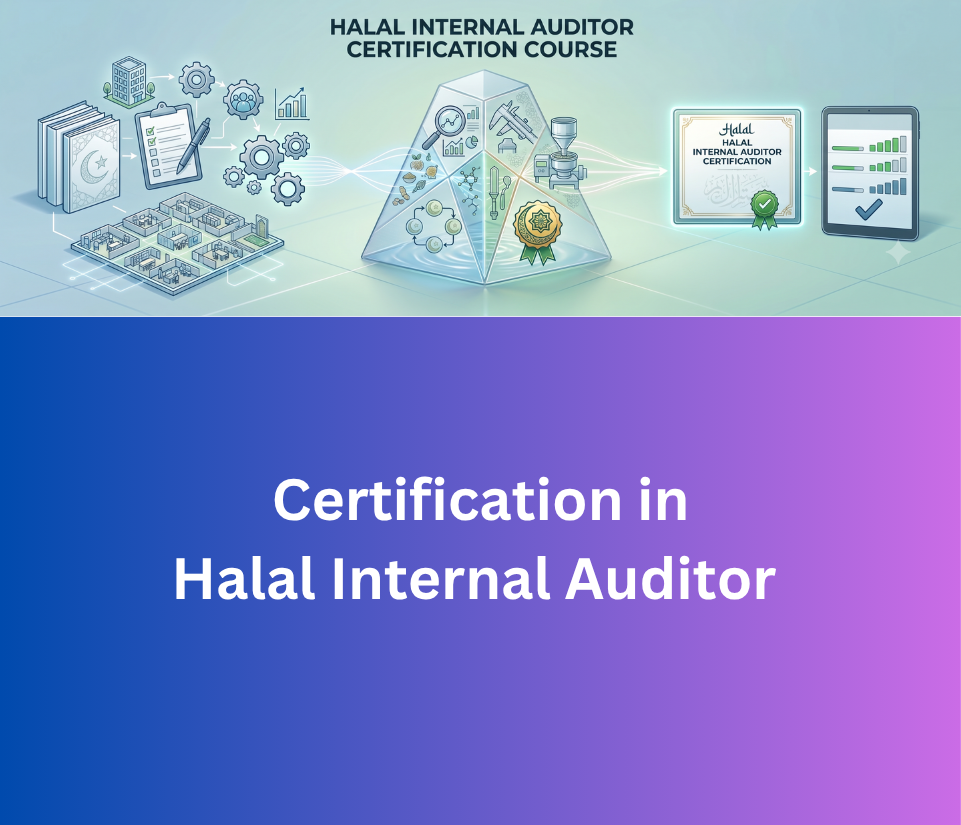
Halal Internal Auditor Certification & Training Course

Master the technical governance, compliance verification, and dietary jurisprudence of Halal manufacturing and consumer products with the Halal Internal Auditor Certification Course, a specialized qualification engineered for Quality Assurance Managers, Shariah Coordinators, Food Technologists, and Plant Compliance Officers across the food processing, pharmaceutical, cosmetic, catering, and slaughtering sectors. Aligned with globally recognized standards—including OIC/SMIIC 1:2019, GSO 2055-1, MS 1500, Indonesia’s BPJPH/HAS 23000 framework, and ISO 19011:2018 auditing methodologies—this comprehensive program equips you to design, execute, and report internal audits of a Halal Assurance System (HAS). Develop practical mastery in evaluating Halalan Toyyiban integrity, auditing high-risk critical ingredients (such as gelatin, emulsifiers, enzymes, and ethanol thresholds), verifying humane animal slaughter parameters, and inspecting dedicated production line segregation alongside ritual cleansing (Sertu/Samak) protocols to eliminate Haram and Najis cross-contamination. Secure a career-defining credential that ensures audit readiness for international Halal Certification Bodies and statutory authorities—including SFDA, UAE MoIAT, and JAKIM—while unlocking high-demand auditing and compliance roles across major Halal supply hubs in India, the UAE, Saudi Arabia, Malaysia, Indonesia, the UK, the US, and the European Union.


Course Highlights

    • Purpose: The primary purpose of the Halal Internal Auditor Certification Course is to equip quality assurance professionals, Shariah coordinators, food technologists, plant managers, and regulatory compliance officers with the technical expertise and auditing methodologies required to plan, execute, and report internal audits of a Halal Assurance System (HAS). Grounded in international Halal standards—including OIC/SMIIC 1:2019 (General Requirements for Halal Food), GSO 2055-1 (Halal Food Requirements), MS 1500 (Malaysian Halal Standard), and Indonesia’s BPJPH/HAS 23000 framework—alongside the auditing guidelines of ISO 19011:2018, this qualification bridges technical food processing with Islamic dietary jurisprudence. By mastering the concepts of Halalan Toyyiban (wholesome and permissible), certified internal auditors systematically identify contamination risks, evaluate ingredients, audit critical control points, and ensure organisational readiness for external audits conducted by internationally accredited Halal Certification Bodies (HCBs) and statutory authorities such as the UAE Ministry of Industry and Advanced Technology (MoIAT), the Saudi Food and Drug Authority (SFDA), and JAKIM Malaysia.
    • Scope: The operational scope of this certification covers first-party internal audits, second-party vendor assessments, and supply chain surveillance across the food and beverage manufacturing, pharmaceutical, nutraceutical, cosmetic, personal care, industrial catering, logistics, and abattoir slaughtering sectors. It encompasses the end-to-end evaluation of raw material procurement, processing aids, animal slaughter protocols, production line segregation, equipment sanitation, packaging materials, and climate-controlled distribution channels. The curriculum addresses the prevention of physical, chemical, microbiological, and spiritual contamination from Haram (forbidden) and Najis (ritually unclean) substances, including porcine derivatives, non-compliant animal fats, and impermissible alcohol content. Structured around harmonized international conformity standards, this credential prepares professionals to audit against statutory Halal export regulations across leading markets including India, the United Arab Emirates, Saudi Arabia, the wider GCC, Malaysia, Indonesia, Singapore, the United Kingdom, the European Union, the United States, and Australia.
    • Benefits of Qualification: Attaining a verified Halal Internal Auditor credential validates specialized technical competence in Halal integrity governance and auditing, significantly enhancing career advancement into high-demand roles such as Halal Assurance Manager, Halal Internal Auditor, Shariah Compliance Executive, Quality Control Lead, and Export Compliance Consultant. For manufacturing corporations and international exporters, employing certified internal auditors guarantees continuous audit readiness, eliminates critical non-conformities during accreditation audits, and secures rapid compliance with import regulations in multi-trillion-dollar global Halal consumer markets. Certified personnel protect businesses against product rejections, costly supply chain recalls, religious non-compliance penalties, and catastrophic brand reputational loss, while reinforcing consumer trust through documented adherence to rigorous Halalan Toyyiban principles.
    • Responsibilities of Certified Personnel: Certified Halal Internal Auditors are responsible for managing, executing, and documenting systematic internal audits to maintain the integrity of an enterprise's Halal Assurance System. Key operational duties include formulating risk-prioritized annual audit plans, preparing customized audit checklists mapped to SMIIC and GSO clauses, and verifying the Halal certification status and traceability of all raw materials, additives, flavors, enzymes, and processing aids. During facility audits, personnel evaluate physical segregation between Halal and non-Halal production streams, verify the efficacy of dedicated cleaning and ritual cleansing (Sertu/Samak) protocols, inspect humane slaughtering and stunning parameters in meat processing facilities, and examine packaging contact surfaces. Post-audit, certified auditors draft comprehensive Non-Conformance Reports (NCRs), classify findings into Critical, Major, or Minor categories, evaluate the technical validity of Root Cause Analyses (RCA) and Corrective and Preventive Action (CAPA) plans, verify corrective implementations, and submit formal audit findings to the Internal Halal Committee (IHC) and executive leadership during Management Review Meetings.
    • Eligibility Criteria: This certification is designed for quality assurance and quality control executives, production supervisors, laboratory chemists, food safety team leaders, procurement managers, slaughterhouse supervisors, and Shariah advisors seeking formal competence in Halal auditing. Eligible applicants should hold a recognized diploma, bachelor’s degree, or master’s degree in Food Science, Food Technology, Biotechnology, Chemistry, Microbiology, Chemical Engineering, Agricultural Science, Islamic Studies, Shariah, Business Administration, or an allied discipline. Working professionals with a minimum of one to two years of verifiable operational, technical, or supervisory experience in food processing, pharmaceutical production, cosmetics manufacturing, logistics, or quality compliance who possess a foundational understanding of food hygiene or management systems are also eligible and encouraged to enroll.
    • Assessment Procedure: Evaluation is administered through a comprehensive, competence-driven examination framework designed to verify both theoretical comprehension of Halal standards and practical auditing decision-making. Formative assessment involves real-world scenario analysis, mock raw material specification reviews, Halal Control Point (HCP) determination exercises, and non-conformance report drafting. The summative evaluation consists of an invigilated end-of-course examination featuring multiple-choice questions (MCQs) and scenario-based compliance challenges covering OIC/SMIIC 1 and GSO 2055-1 clause interpretations, critical contamination vectors, auditor interviewing techniques under ISO 19011, and CAPA validation. Candidates must achieve a minimum cumulative score of 80% across all assessment components to pass and receive the official Halal Internal Auditor Certificate of Competence.

    • Curriculum: The curriculum provides comprehensive technical, theological, and regulatory instruction across the complete Halal management lifecycle without reliance on numbered or fragmented instructional tiers. Foundational modules examine the fundamentals of Islamic dietary laws, defining Halal, Haram, Mashbooh (doubtful), Halalan Toyyiban, and the classifications of Najis (Mukhaffafah, Mutawassitah, Mughallazah). Learners explore major international Halal standards—including OIC/SMIIC 1:2019, GSO 2055-1, MS 1500, and BPJPH/HAS 23000—and the establishment of an Internal Halal Committee (IHC). Detailed technical coursework focuses on critical ingredients and additives, evaluating the origins and status of gelatin, mono- and diglycerides (E471), enzymes (rennet, pepsin), collagen, amino acids, and ethanol thresholds in food and beverages. Meat and poultry modules cover humane handling, slaughterhouse hygiene, mechanical vs. manual slaughter, stunning limitations, the recitation of Tasmiyah, and the severance of trachea, esophagus, and jugular vessels. Practical sanitation modules cover Clean-in-Place (CIP) regimes, chemical sanitization, and the procedural execution of Sertu (ritual cleansing with clay/soil water) for contaminated processing lines. The program delivers thorough instruction on ISO 19011:2018 auditing methodologies, risk-based audit scheduling, opening and closing conference protocols, objective evidence gathering, interviewing dynamics, Non-Conformance Report (NCR) drafting, root cause analysis (RCA), CAPA verification, and presentation of audit outcomes during executive management reviews.
     

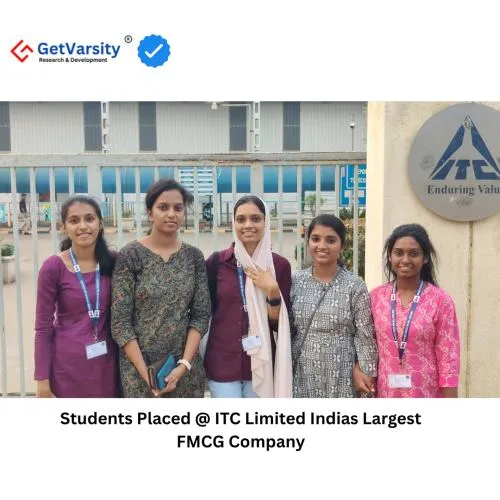
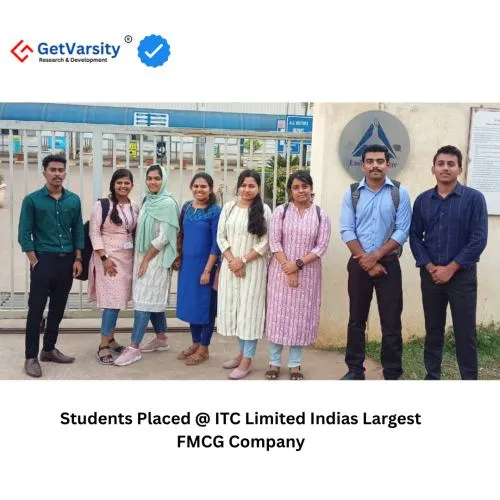
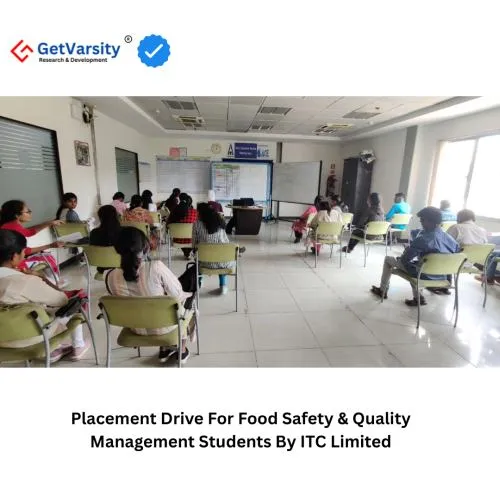
Placements & Internships

Sandra S
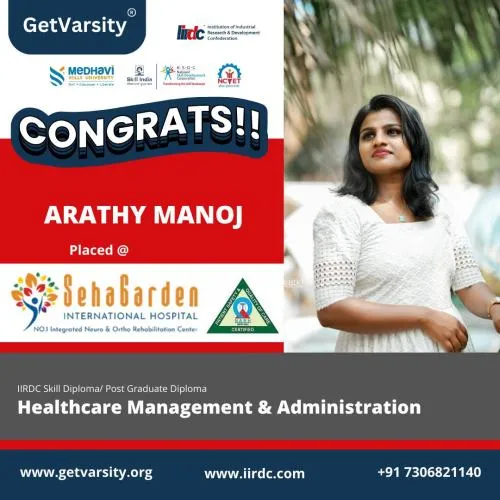
Arathy Manoj
Bineesh
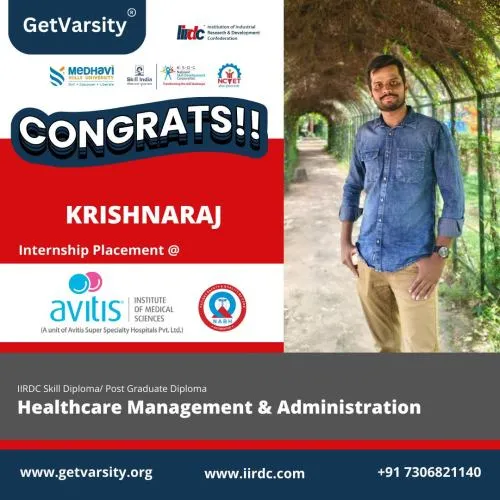
Krishna Raj
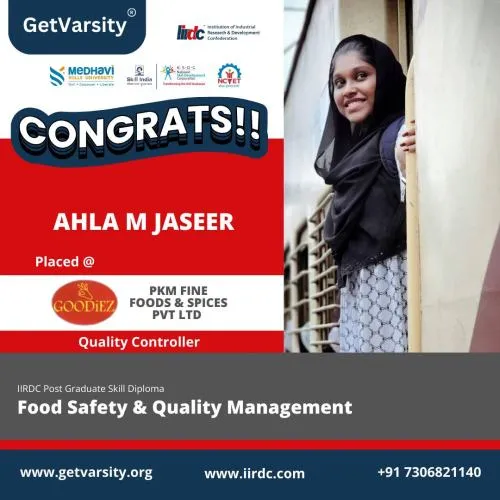
Ahla M Jaseer
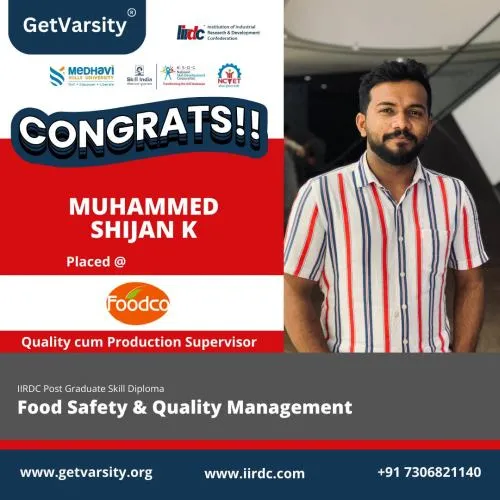
Muhammed Shijan K
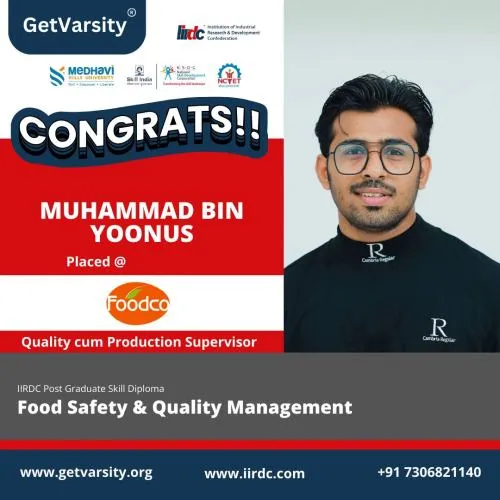
muhammed Bin Yoonus
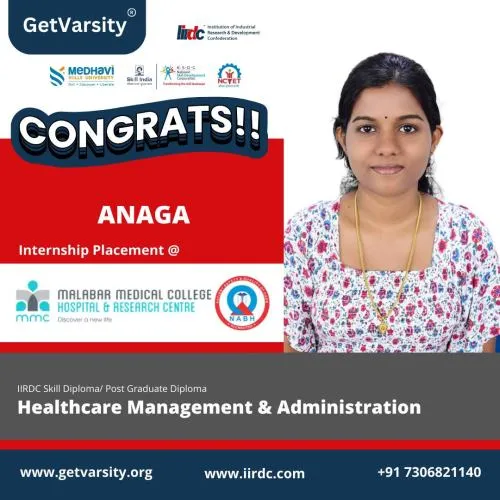
Anaga
Anagha D
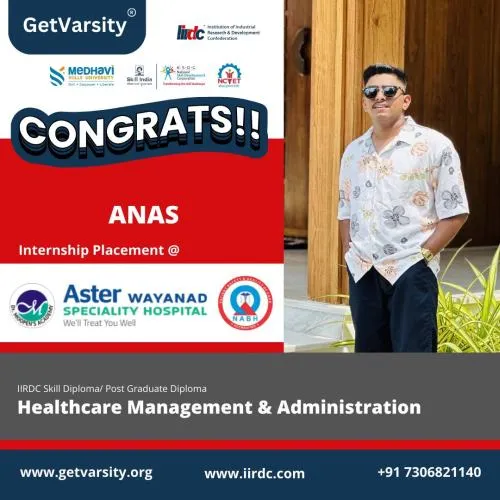
Anas

why getvarsity ?

skill india
Skill India Training Partner / Provider /
Project Management Unit (PMU)

IIRDC is an Skill India (Ministry of Skill Development &Entrepreneurship) TP which have rights to Approve, Accredit andCreate Training Centers (TC) under IIRDC and Impart NSQF, NHEQF,Non - NSQF Certification Programs. (Service Agreement Sl. No. B386880). All IIRDC TC’s would qualify as Government recognizedskill training institution status.

ncvet
NCVET Training Body

IIRDC is a Training Body having rights to Approve, Accredit and Create Training Centers under IIRDC TB of NCVET Awarding Body. Also IIRDC holds Rights of Research & Development of New Industry Anchored NSQFand NHEQF Qualifications Through AB. All confederation companiesunder IIRDC will be accredited skill centers of AB.

ugc
UGC Approved Skill University's Industry Outreach
Partner / Skill Training Partner & Service Partner

GetVarsity is a company, not a UGC-regulated HEI, and provides fee-based Skill training and institutional support, while universities handle all academic processes, including admissions, exams, and awarding degrees. GetVarsity partners with universities and industry to integrate higher education with skill development, supporting UGC-approved work-integrated, vocational, and apprenticeship-based programs aligned with NEP 2020. 

iirdc
Personnel Skill Assessment & Certification Body

IIRDC Is an Autonomus Skill Assessment and CertificationAwarding Bodyworking as per the norms under international standards forGeneralrequirements for bodies operating certification of persons.IIRDCensures that a certified candidate holds the skills andexpertise ina specialized area through systematic assessments.

TÜV SÜD
TUV SUD Germany Food Safety and Quality 1st Cooperation Partner in India

TÜV SÜD Germany is a globally trusted technical service providerwithover 150 years of legacy in quality assurance and safety.Renowned forits rigorous standards, TÜV SÜD offers comprehensive testing,inspection, auditing, and certification services tailored to the food industry. Getvarsity is an official Training center & Confederation company of IIRDC ( TÜV SÜD Cooperation Partner )

digilocker
DigiLocker Verified

All IIRDC NCrF (NHEQF / NSQF) Aligned Skill Qualification Certifications issued in association with NCVET AB will be added into DigiLocker — a platform where Government Documents like Aadhaar, PAN, and Driving License are issued and verified. Credits will also be issued in ABC verifiable through DigiLocker.

abc skill credits
Academic Bank of Credits (ABC) Body

ABC is a digital system established under the National Education Policy (NEP) to facilitate credit accumulation, transfer, and redemption across higher education institutions. It allows candidates to earn credits for completed coursework. As per the ABC framework, 30 hours of learning equate to 1 academic credit, ensuring standardized recognition of learning outcomes across institutions. All NCrF aligned courses provided by Getvarsity holds ABC Skill credits.

nad
National Academic Depository (NAD)

NAD is a platform established by the Government to securely store and verify academic awards issued. Managed by DigiLocker and integrated with the Academic Bank of Credits (ABC), it enables verified documents anytime, reducing fraud and administrative delays while supporting the goals of NEP 2020. Certificates issued for Getvarsity students, which are aligned to NCrF, is linked to NAD.

nep 2020
National Education Policy (NEP)

The National Education Policy (NEP) 2020 aims to create a flexible and integrated education system. It connects school, higher, and vocational learning through the National Credit Framework (NCrF), National Higher Education Qualification Framework (NHEQF), and National Skills Qualifications Framework (NSQF), enabling credit transfer, skill integration, and lifelong learning. Getvarsity delivers NCrF courses aligned to NEP 2020 

Highfield Qualifications International Approved Center

As a Highfield Qualifications International Approved Center, Getvarsity delivers globally recognized qualifications regulated by Ofqual and CCEA Regulation. Additionally, authorized to deliver programs in Wales, which are regulated by Qualifications Wales.
Frequently Asked Questions

Vision
Vision

To be a Global Benchmark in Multidisciplinary Innovations, Skills Excellence and Quality Standards.

Autonomous

IIRDC Accredited Confederation Member Organization. IIRDC Autonomous Professional body Incorporated and Established under section-8, Act 2013, formerly known as Section -25, Act 1956, Regulated by the Ministry of Corporate Affairs, Government of India
Mission
Mission

To deliver high-quality solutions through innovation, integrity, and collaboration while prioritising client satisfaction and sustainable development.
Accreditations | Association | Approvals | Certifications | Memberships

image
image
image
image
image
image
image
image
image
image
image
image
image
image

Why Choose IIRDC NCrF / IIRDC NHEQF Certification

India’s first and Kerala’s only IIRDC NHEQF Credit Certificate. Getvarsity is Officially Entitled to provide IIRDC NSQF, IIRDC NHEQF, IIRDC Personnel Skill Certification, etc., through IIRDC Accreditation as a confederation training partner.

The IIRDC NCrF/IIRDC NHEQF certificate will be recognised as a skill qualification in various sectors.

Valid for state/central government, Private sector jobs where skill qualifications are allowed under IIRDC NSQF/IIRDC NHEQF.

National Academic Depository (NAD) enabled program

NSDC, NCVET, UGC, Skill India, University, NCrF approved IIRDC NCrF Certification

Partnered with Skill India by the Ministry of Skill Development and Entrepreneurship

IIRDC NCrF/ IIRDC NHEQF Certificates Issued on DigiLocker: Secure, government-authenticated verification.

Credits issued on ABC (Academic Bank of Credits) in Digilocker (40 & 20 as per Hrs)

Embassy Attestation Eligibility

IIRDC NHEQF/ NSQF is fully aligned with NCrF (National Credit Framework)

Recognition across universities: Acceptable by HEIs (Higher Education Institutions) that follow UGC guidelines.

Courses are mapped with industry competency standards, increasing job readiness.

Aligns with NEP 2020 (National Education Policy) for multidisciplinary, flexible education.

Stackable learning: Can stack multiple level-based certificates towards a higher qualification.

Can be used for applying to government MSME schemes, subsidies, and loans (like Mudra, PMEGP) which ask for proof of technical training.

Helps learners get priority in Apprenticeship (NATS/NAPS) and Internship schemes under various ministries where skill qualifications are mandatory.

icon

Internship Placements in 2023-2024

icon

Industry Expert faculties & mentor network

icon

Entity Associated With NCVET Awarding Bodies

icon

In Certification & Training

icon

Industry Driven / Anchored Updated Curriculum

icon

One Who Introduced Internship Integrated Skill Development

icon

Skill University Industry Outreach Partner

icon

Loans & Financial Assistance For Eligible Learners

icon

Years Skill Development Track Record For Board Members

icon

Accredited Skill Training, & Certification Center

icon

Autonomous IIRDC Confederation Entity

icon

Attestations Eligibility

icon

IIIRDC Accredited Skill Centers in across India

icon

One among few IIRDC Confederation Companies

icon

Skill training centers in prime locations

icon

One who introduced Placement Assistance and Career development Module

icon

Certificates with International Online Verification through IIRDC or awarding body Website

icon

Offline | Online | Hybrid | On - Job Learning Modes

icon

implementation of courses adheres to National Educational Policy (NEP) 2020 in association with NCVET

icon

No Cost EMI Finance options

icon

MOU’s with multiple organizations

icon

Dedicated Research and Development wing

icon

Innovation and Entrepreneurial Support

icon

No.1 in curriculum and practicals

Call Back Request Form

Talk to us?

Call us?