About iStudy

Getvarsity is established and incorporated with the objective to provide a comprehensive range of Continuous Professional Development (CPD), Personnel Skill Assessment, Industrial Quality standardization, Corporate Training, and Personnel Skill Certification solutions that meet the needs of stakeholders in an ever-changing Industrial ecosystem.

Account

Follow Us

TÜV SÜD Food Safety Professional

This Getvarsity program qualifies professionals for the TÜV SÜD Certified Food Safety Professional Certification in full compliance with CASCO and ISO/IEC 17024 guidelines and the official scheme document. Delivered By GetVarsity, an IIRDC Confederation Company (Recognized Education Provider) as per the agreement between TÜV SÜD South Asia Private Limited and the Institution on Industrial Research and Development Confederation (IIRDC) Companies

Course Highlights

    • TÜV SÜD is a globally trusted technical service provider with over 150 years of legacy in quality assurance and safety. Renowned for its rigorous standards, TÜV SÜD offers comprehensive testing, inspection, auditing, and certification services tailored to the food industry.
    • TÜV SÜD certifications are highly respected worldwide, with numerous global food companies audited and certified under TÜV SÜD Germany and its subsidiaries.
    • Achieving the TÜV SÜD Certified Food Safety Professional credential demonstrates that a candidate possesses the skills and knowledge aligned with global food industry standards—boosting their professional credibility and international career prospects.
    • TÜV SÜD stands as a symbol of quality, integrity, and consumer trust in the food sector. TÜV SÜD’s comprehensive food sector services encompass a broad spectrum of global and national standards designed to ensure uncompromising quality and compliance across the supply chain. Their core offerings include rigorous food safety, supplier, and hygiene audits aligned with HACCP, ISO 22000, FSSC 22000, and BRC food standards. Additionally, they provide essential support for GMP and FSSAI Schedule IV compliance, alongside the implementation of ISO 9001 Quality Management Systems (QMS). Beyond auditing and management frameworks, TÜV SÜD delivers specialized training and certification programs in food safety and hygiene. They also conduct exhaustive product testing for contaminants, nutritional profiles, and labeling compliance, while offering expert regulatory guidance to help organizations navigate complex frameworks such as FSSAI, Codex Alimentarius, and GFSI.
    • Duration: 600 Hours
    • Offline | Online | Hybrid | On - Job
    • 1 to 6 Months Internship @ Food Industry
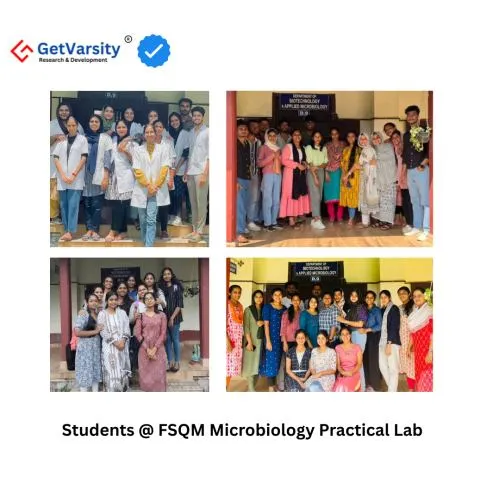
    • Classes by Expert in FSQM
    • Updated Industry-Driven Curriculum
    • Purpose : The Certification of Persons “TÜV SÜD Certified Food SafetyProfessional” is a comprehensive scheme that provides assessment and certification for individuals seeking to demonstrate their knowledge and/or competence in food Industry and this knowledge can be applied, internationally anywhere around the world.

    • Scope: The scope of the scheme is to assess the competency of the candidate who demonstrates knowledge on food safety in professional manner and is certified as per defined criteria. This scheme is developed in compliance with ISO/IEC 17024 for ensuring International Standards for the certification of persons.

    • Benefits of the Qualification :  The “TÜV SÜD Certified Food Safety Professional program” is designed for both current professionals and those planning to enter the food industry who want to advance their careers in food safety. Upon passing the final assessment, certified individuals are fully equipped to take on vital roles within manufacturing, catering, production, and other relevant sectors. Graduates can serve as integral members of an organization's food safety team, conduct internal organizational audits, and act as trainers to educate the internal workforce on fundamental food safety practices. Please note that while this certification significantly enhances professional capabilities, it does not replace mandatory legal requirements.

    • Responsibilities of the Certified Personnel : Certified personnel are equipped to take full responsibility and accountability for effectively managing an organization's food safety challenges. They possess a comprehensive understanding of critical requirements, including the terminologies, clauses, and practical industry implementation of key standards such as ISO 9001:2015, ISO 22000:2018, FSSC 22000, and BRCGS. Furthermore, these professionals are deeply knowledgeable in QMS and FSMS principles, process management, and PDCA concepts. Their practical expertise extends to executing proper sampling methodologies, conducting chemical and microbiological food analysis, and implementing crucial protocols for food defense, food fraud, allergens, environmental monitoring, food safety culture, and food labeling. Ultimately, they are well-versed in navigating certifications, accreditations, and all applicable statutory and regulatory compliance requirements.

    • Eligibility Criteria : To be eligible to apply for this program, candidates must meet specific educational, experiential, and training requirements. Applicants must either have passed their Matriculation or 10+2 along with one year of relevant experience in the food industry, or be currently pursuing or have already completed a Bachelor's degree in any discipline from a recognized institution. Additionally, candidates are required to hold formal certificates—both of which must include successful examinations—in Prerequisite Programs (PRP) that comply with statutory, Codex, or ISO/TS 22002.x standards, as well as in Hazard Analysis and Critical Control Points (HACCP). Finally, all eligible individuals must have completed a minimum of 600 hours of classroom or virtual training covering the specific topics outlined in the scheme document.

    • Assessment Procedure : The entire assessment will be carried out through classroom test and online examination. Theoretical assessment with Multiple Choice Questions (MCQ) and scenario-based questions will be part of TUV SUD qualification process to check the adequate knowledge of Food Safety. Candidates have to score 70% in all Modules) of online assignments to clear the qualification. If the score is < 70 in any one of the modules, then it is assumed that the candidate is not qualified. The candidate must undergo a re-assessment within six (6) month in that specific module.

    •  

      Curriculum : The comprehensive syllabus for the TÜV SÜD Certified Food Safety Professional Program is meticulously designed to cover all critical aspects of industry compliance, quality control, and safety management. The curriculum begins with foundational industry terminologies (including FSSC 22000, ISO 9001:2015, and BRCGS) and provides extensive training in the chemical and microbiological analysis of various food sectors and water. Candidates will master the core principles of QMS and FSMS—such as the PDCA cycle, process approach, and risk-based thinking—before diving deep into the complete clauses of the ISO 9001:2015 and ISO 22000:2018 standards. To address modern industry threats, the program equips professionals with specialized skills in Food Defense (TACCP) and Food Fraud (VACCP) risk assessment, comprehensive Allergen Management, Environmental Monitoring Programs (EMP), and strategies for building a strong Food Safety Culture. Additionally, the coursework covers vital operational topics, including Sustainability and food waste reduction, global Food Labelling, Supply Chain and cold chain management, and robust Crisis Management and root cause analysis. Finally, the program ensures full regulatory readiness by detailing the roles of Certification and Accreditation bodies alongside overarching global legal requirements spanning India (FSSAI), the USFDA, the EU, the Gulf, and Australia/New Zealand.

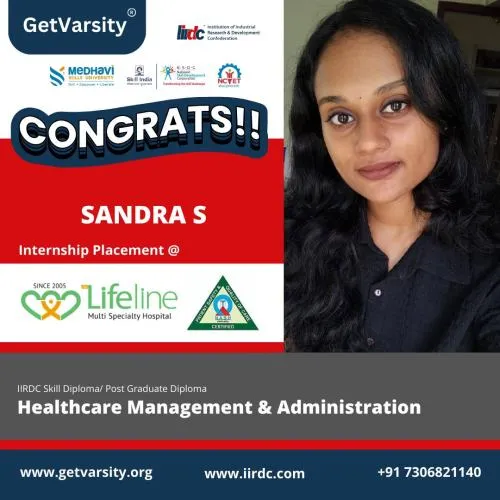
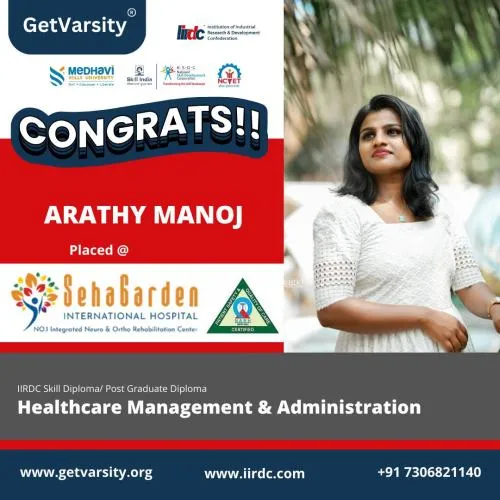
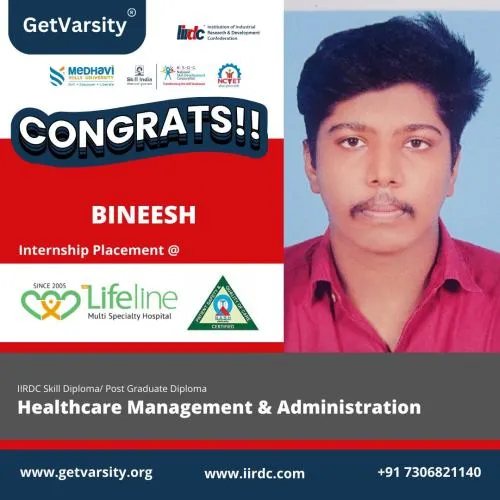
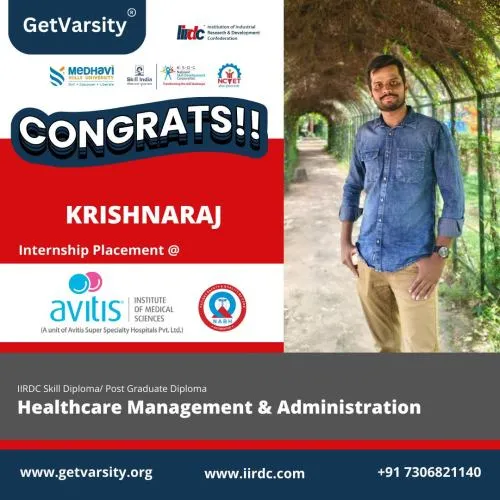
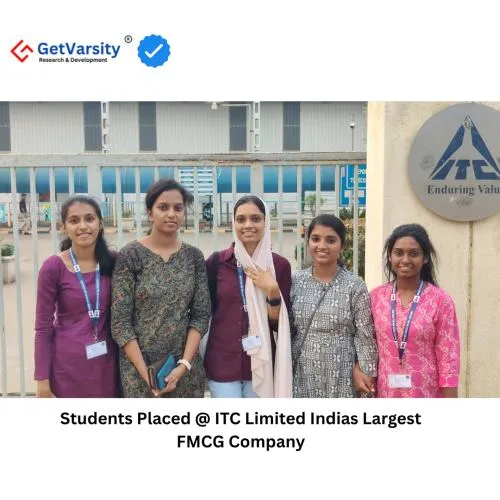
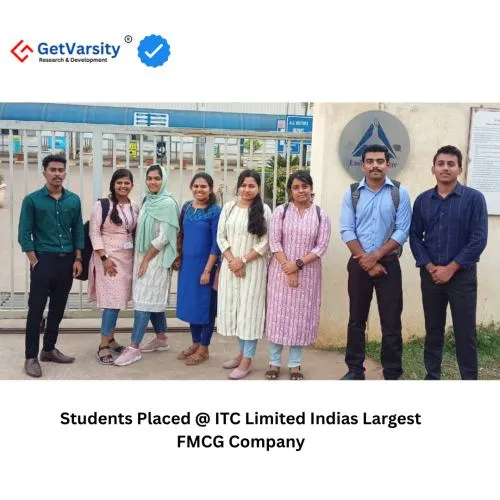
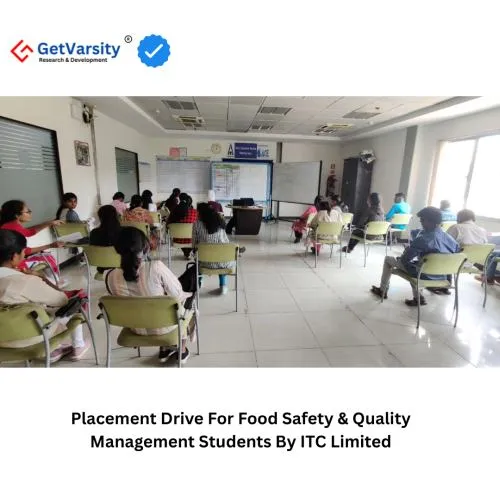
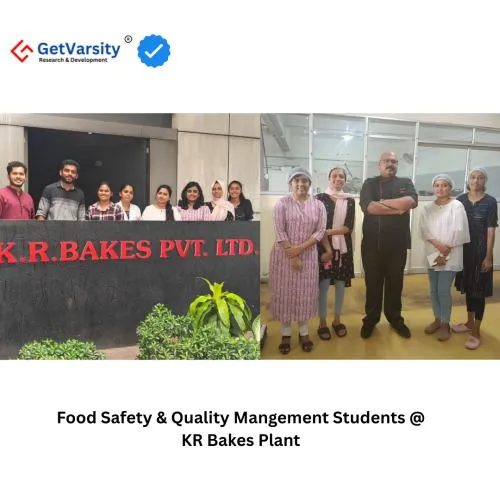
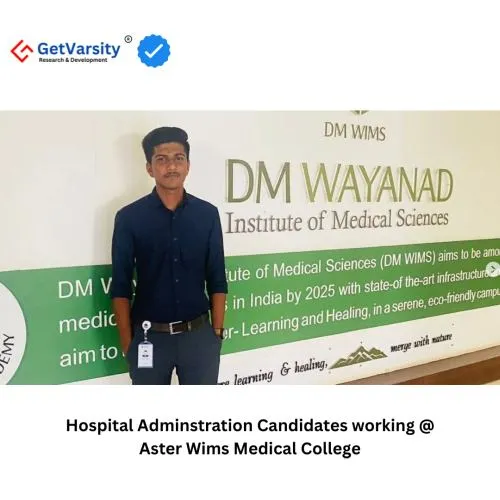
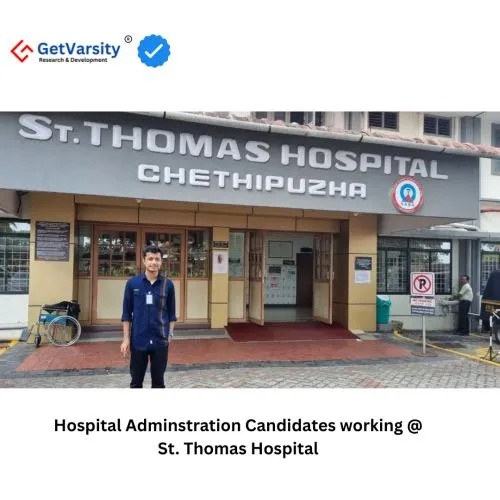
Placements & Internships

Sandra S
Arathy Manoj
Bineesh
Krishna Raj
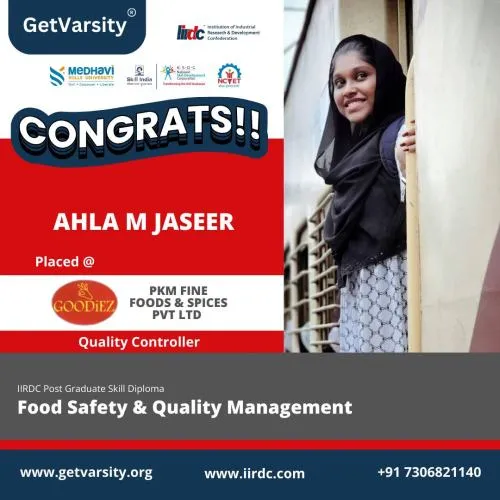
Ahla M Jaseer
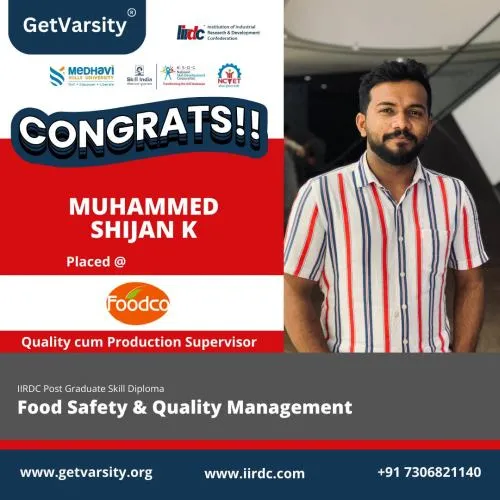
Muhammed Shijan K
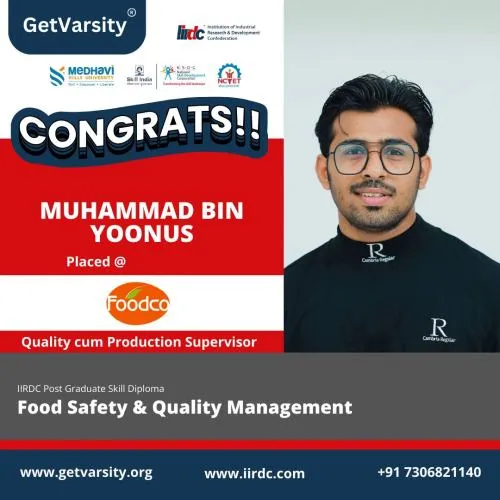
muhammed Bin Yoonus
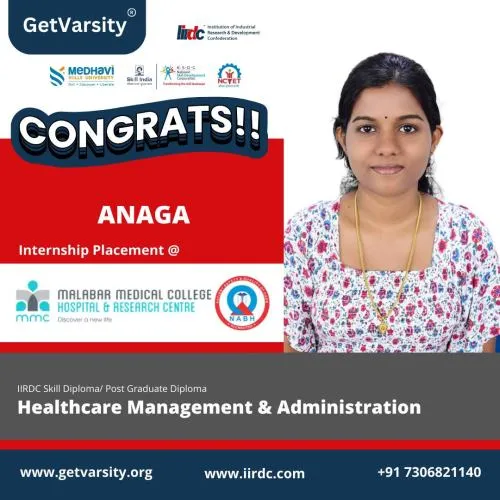
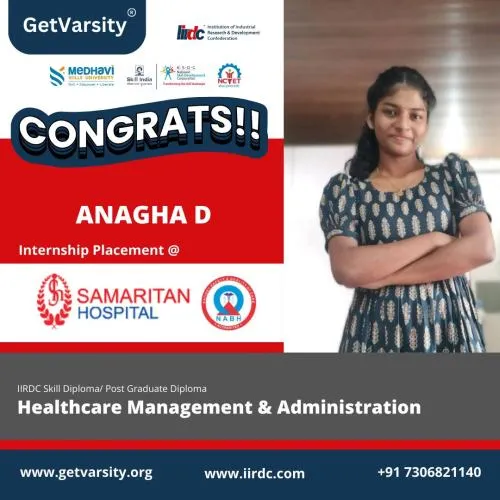
Anaga
Anagha D
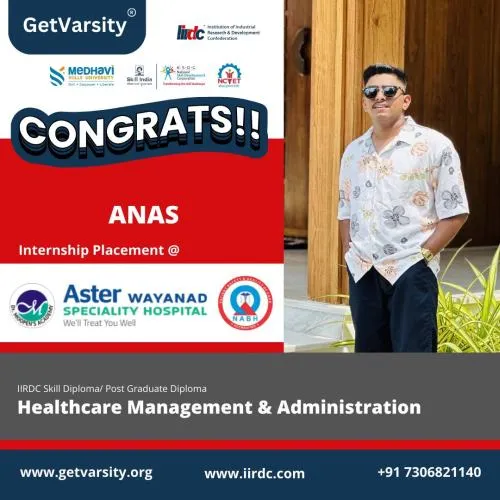
Anas

why getvarsity ?

skill india
Skill India Training Partner / Provider /
Project Management Unit (PMU)

IIRDC is an Skill India (Ministry of Skill Development &Entrepreneurship) TP which have rights to Approve, Accredit andCreate Training Centers (TC) under IIRDC and Impart NSQF, NHEQF,Non - NSQF Certification Programs. (Service Agreement Sl. No. B386880). All IIRDC TC’s would qualify as Government recognizedskill training institution status.

ncvet
NCVET Training Body

IIRDC is a Training Body having rights to Approve, Accredit and Create Training Centers under IIRDC TB of NCVET Awarding Body. Also IIRDC holds Rights of Research & Development of New Industry Anchored NSQFand NHEQF Qualifications Through AB. All confederation companiesunder IIRDC will be accredited skill centers of AB.

ugc
UGC Approved Skill University's Industry Outreach
Partner / Skill Training Partner & Service Partner

GetVarsity is a company, not a UGC-regulated HEI, and provides fee-based Skill training and institutional support, while universities handle all academic processes, including admissions, exams, and awarding degrees. GetVarsity partners with universities and industry to integrate higher education with skill development, supporting UGC-approved work-integrated, vocational, and apprenticeship-based programs aligned with NEP 2020. 

iirdc
Personnel Skill Assessment & Certification Body

IIRDC Is an Autonomus Skill Assessment and CertificationAwarding Bodyworking as per the norms under international standards forGeneralrequirements for bodies operating certification of persons.IIRDCensures that a certified candidate holds the skills andexpertise ina specialized area through systematic assessments.

TÜV SÜD
TUV SUD Germany Food Safety and Quality 1st Cooperation Partner in India

TÜV SÜD Germany is a globally trusted technical service providerwithover 150 years of legacy in quality assurance and safety.Renowned forits rigorous standards, TÜV SÜD offers comprehensive testing,inspection, auditing, and certification services tailored to the food industry. Getvarsity is an official Training center & Confederation company of IIRDC ( TÜV SÜD Cooperation Partner )

digilocker
DigiLocker Verified

All IIRDC NCrF (NHEQF / NSQF) Aligned Skill Qualification Certifications issued in association with NCVET AB will be added into DigiLocker — a platform where Government Documents like Aadhaar, PAN, and Driving License are issued and verified. Credits will also be issued in ABC verifiable through DigiLocker.

abc skill credits
Academic Bank of Credits (ABC) Body

ABC is a digital system established under the National Education Policy (NEP) to facilitate credit accumulation, transfer, and redemption across higher education institutions. It allows candidates to earn credits for completed coursework. As per the ABC framework, 30 hours of learning equate to 1 academic credit, ensuring standardized recognition of learning outcomes across institutions. All NCrF aligned courses provided by Getvarsity holds ABC Skill credits.

nad
National Academic Depository (NAD)

NAD is a platform established by the Government to securely store and verify academic awards issued. Managed by DigiLocker and integrated with the Academic Bank of Credits (ABC), it enables verified documents anytime, reducing fraud and administrative delays while supporting the goals of NEP 2020. Certificates issued for Getvarsity students, which are aligned to NCrF, is linked to NAD.

nep 2020
National Education Policy (NEP)

The National Education Policy (NEP) 2020 aims to create a flexible and integrated education system. It connects school, higher, and vocational learning through the National Credit Framework (NCrF), National Higher Education Qualification Framework (NHEQF), and National Skills Qualifications Framework (NSQF), enabling credit transfer, skill integration, and lifelong learning. Getvarsity delivers NCrF courses aligned to NEP 2020 

Frequently Asked Questions

The "TÜV SÜD Certified Food Safety Professional" is an internationally recognized certification scheme developed in compliance with ISO/IEC 17024. It provides comprehensive assessment and certification for individuals seeking to demonstrate their knowledge and competence in food safety standards within the global food industry. The TÜV SÜD Food Safety Professional certification is a globally recognised personnel qualification issued under the authority of TÜV SÜD Germany — one of the world's most trusted technical service organisations with over 150 years of expertise in safety, quality, and compliance. Unlike standard course completion certificates, this credential certifies the individual's demonstrated competence in food safety management, HACCP implementation, regulatory compliance, and food quality systems to an internationally benchmarked standard. The certification is accredited under ISO/IEC 17024:2012 — the international standard for personnel certification bodies — making it among the most rigorous and credible food safety credentials available to professionals worldwide.

To be eligible for the exam, candidates must meet the following criteria:

  • Have passed Matriculation or 10+2 with at least 1 year of experience in the food industry, OR be pursuing/completed a Bachelor's degree in any discipline.

  • Hold a certificate in Prerequisite Programs (PRP) with examination.

  • Hold an valid certificate in HACCP with examination ( Eg: IIRDC Certified HACCP Level 3 ).

  • Have completed a minimum of 600 hours of classroom or virtual training on the specified syllabus topics.

The exam syllabus covers comprehensive food safety and management topics, including:

  • Terminologies across FSSC 22000, ISO 9001:2015, and BRCGS.

  • Chemical and Microbiological food analysis.

  • Quality Management Systems (ISO 9001:2015) and Food Safety Management Systems (ISO 22000:2018).

  • TACCP (Food Defense) and VACCP (Food Fraud).

  • Allergen Management and Environmental Monitoring Programs (EMP).

  • Food Safety Culture, Crisis Management, and Food Labelling.

  • Global legal requirements including FSSAI (India), USFDA, and EU legislation.

Earning this certification enhances your career prospects in the food manufacturing and processing sectors. Certified individuals can take on critical roles such as being a core part of an organization's food safety team, conducting internal audits, or acting as an internal trainer to educate the workforce on basic food safety.

The assessment is a web-proctored online examination that lasts for 120 minutes. It is an open-book exam, meaning candidates can refer to standard physical course materials or books, but internet browsing and electronic gadgets are strictly prohibited. The 100-mark exam consists of:

  • 35 Multiple Choice Questions (MCQs) worth 2 marks each.

  • 3 Case Study/Scenario-based questions worth 10 marks each.

Candidates must score a minimum of 70% to pass the certification exam. If a candidate fails, they are allowed to take one re-test with re-examination fees. To initiate a re-test, you must contact your training provider (IIRDC - Getvarsity) to reschedule. If the re-test is also failed, the candidate must submit a fresh application.

To ensure a smooth online exam experience, candidates need:

  • A laptop or desktop computer (mobile devices are not allowed).

  • A stable, high-bandwidth internet connection and power backup.

  • A working webcam and microphone, which must remain ON for the entire duration of the proctored exam.

  • An up-to-date browser (like Microsoft Edge or Chrome) with no proxy enabled and no third-party virtual cameras installed.

The certificate is valid for 5 years from the date of issue. However, the certificate is tied to current management system standards; if the underlying management systems undergo major version changes, an upgrade or recertification may be required.

The examination is carefully structured to evaluate different cognitive levels. The overall question paper consists of:

  • Easy Level (20%): Multiple Choice Questions (MCQs) focused on remembering and understanding core concepts.

  • Medium Level (30%): MCQs requiring the application and analysis of food safety principles.

  • Difficult Level (50%): Scenario-based and case study questions designed to test your ability to evaluate and create solutions in real-world situations.

The curriculum includes dedicated modules for both TACCP and VACCP:

  • TACCP (Food Defense): Focuses on identifying intentional threats like sabotage or malicious contamination, developing defense plans, and crisis management.

  • VACCP (Food Fraud): Covers the prevention of economically motivated adulteration such as substitution, dilution, or counterfeiting, including supply chain vulnerability assessments.

While the initial certificate is valid for 5 years, formal recertification is specifically triggered when there is a change in the version of the certification scheme (which occurs when the syllabus is updated). Certified professionals are also expected to continuously stay updated on any changes to relevant standards or statutory requirements.

Yes, all certified personnel must adhere to a strict Code of Ethics. This mandates that professionals conduct themselves with honesty and impartiality , prioritize the health and safety of the public , avoid any conflicts of interest , and only undertake assignments for which they are genuinely competent.

A TÜV SÜD Food Safety Professional certification is a personnel certification governed by ISO/IEC 17024:2012, which means it independently verifies an individual's competence through a structured examination — not just course attendance. TÜV SÜD's 150-year legacy and presence in over 100 countries means its certifications carry exceptional weight with multinational food companies, GFSI-audited supply chains, and international regulatory authorities. Standard food safety certificates confirm training completion; a TÜV SÜD credential confirms tested, independently validated professional competence. For professionals seeking roles with global food manufacturers, hotel chains, or third-party certification bodies, the TÜV SÜD brand is often specifically requested or preferred by employers during recruitment.

GetVarsity delivers the TÜV SÜD Food Safety Professional certification as an accredited IIRDC Confederation member training centre. IIRDC (Institution of Industrial Research and Development Confederation) is an official cooperation partner of TÜV SÜD, authorised to host TÜV SÜD professional certification programmes. GetVarsity holds accreditation or recognised from TÜV SÜD - IIRDC, NCVET & UGC Approved Skills Universities, Skill India, and NSDC, and operates under ISO 9001:2015, ISO 21001:2018, ISO 29993:2017, and ISO/IEC 17024:2012 quality frameworks. This makes GetVarsity one of India's most comprehensively accredited providers for internationally recognised food safety professional certification.

The TÜV SÜD Food Safety Professional certification is designed for experienced food industry professionals operating at a management or senior supervisory level or Fresh graduates looking forward for a career in Food safety field . Ideal candidates include Food Safety Managers, Quality Assurance Managers, HACCP Team Leaders, Food Safety Auditors, Regulatory Compliance Officers, Food Technologists, Production Managers, and independent food safety consultants. It is also highly suitable for professionals working in — or targeting roles within — multinational food manufacturers, international hotel and catering groups, GFSI-certified supply chains, government food regulatory bodies, and third-party food certification agencies, where the TÜV SÜD brand credential carries significant credibility with employers and clients.

The TÜV SÜD Food Safety Professional certification assesses competence across the core pillars of professional food safety management. Coverage includes food safety management systems (FSMS) design and implementation, HACCP principles and critical control point management, ISO 22000 and FSSC 22000 frameworks, food hygiene and contamination control, prerequisite programmes (PRPs), regulatory compliance across FSSAI, FSMA, EU Food Law, and Codex Alimentarius, food safety auditing methodologies, risk assessment and corrective action management, food labelling and traceability requirements, and food safety culture and leadership. The curriculum is benchmarked against international standards to ensure global applicability across all food industry sectors.

To qualify for the TÜV SÜD Food Safety Professional certification program, candidates must meet a comprehensive set of educational, training, and experiential criteria. Applicants must either possess a Matriculation/10+2 qualification supplemented by one year of relevant food industry experience, or be enrolled in or have completed a Bachelor's degree in any discipline. In addition to completing a minimum of 600 hours of specialized classroom or virtual training aligned with the scheme document, candidates must hold formal, exam-based certificates in Hazard Analysis and Critical Control Points (HACCP) and Prerequisite Programs (PRP) that meet statutory, Codex, or ISO/TS 22002.x standards. Furthermore, applicants are expected to have either 13 hours of prior professional training relevant to the certification scope or demonstrated practical experience in a food safety management or quality assurance role. While professionals with direct industry experience in food production, catering, or regulatory compliance are exceptionally well-suited for this credential, possessing a relevant background in disciplines like food science, microbiology, or hotel management—alongside prior qualifications such as Food Safety Level 3 or 4—will further strengthen an application and ensure readiness for the examination.

The TÜV SÜD Food Safety Professional certification is assessed through a structured examination aligned with TÜV SÜD's internationally standardised personnel certification methodology. The examination consists of a written component covering multiple-choice questions testing breadth of knowledge, and a subjective section assessing the ability to apply food safety concepts to real-world professional scenarios. An overall pass mark of 70% is required, with a minimum of 50% required in each individual examination part. The examination is proctored to maintain the integrity and global credibility of the TÜV SÜD credential. Successful candidates receive their certification directly under the authority of TÜV SÜD Germany via the IIRDC certification framework.

Yes — the TÜV SÜD Food Safety Professional certification carries some of the broadest international recognition available for a food safety personnel credential. TÜV SÜD operates across 100+ countries and its certifications are accepted by food industry employers, government regulatory bodies, and GFSI-aligned supply chains globally. The certification is eligible for apostille attestation across 150+ countries, making it legally valid for professional use in international markets. It is specifically recognised in India, the UAE, UK, USA, Canada, Australia, and across Middle Eastern and European markets. 

Yes, the TÜV SÜD Food Safety Professional certification is available through flexible online and classroom delivery formats via GetVarsity. The online format provides Instructor led Live online classes, self-paced learning through video modules, structured study content, and digital assessments, allowing busy food industry professionals to prepare for the certification examination without interrupting their careers. The examination itself follows TÜV SÜD's proctored examination standards, which can be conducted online under supervised conditions. Upon successful completion, your TÜV SÜD certification is issued digitally and backed by GetVarsity's full accreditation framework under IIRDC and TÜV SÜD Germany — equally valid whether completed online or in a classroom.

Holding a TÜV SÜD Food Safety Professional certification significantly elevates your professional profile and opens doors to senior food safety roles across the global food industry. Certified professionals are well positioned for appointments as Food Safety Manager, Quality Director, HACCP Lead Auditor, Regulatory Compliance Specialist, Technical Manager, and Food Safety Consultant in food manufacturing, hospitality, retail, and regulatory organisations. Because the TÜV SÜD credential is specifically recognised by multinational employers and GFSI-audited supply chains, it often commands stronger salary outcomes than generic food safety qualifications. In India, senior food safety managers typically earn INR 2,00,000–20,00,000 per year, while internationally these roles offer USD 55,000–120,000 per year depending on market and seniority.

TÜV SÜD (Technischer Überwachungsverein Süddeutschland) is a globally renowned German technical services organisation founded in 1866, with over 158 years of expertise in safety, quality, and compliance. Headquartered in Munich, Germany, TÜV SÜD operates in over 1,000 locations across 50+ countries with more than 28,000 employees. In the food industry, TÜV SÜD provides testing, inspection, auditing, and certification services covering the entire supply chain — from farm and raw materials through manufacturing, packaging, distribution, and retail. TÜV SÜD was one of the first certification bodies to offer food safety management system certification and has over 15 years of specialised food sector experience. Its certifications are recognised by multinational food companies, GFSI-audited supply chains, and regulatory authorities worldwide, making a TÜV SÜD credential one of the most trusted and valuable qualifications a food safety professional can hold.

ISO/IEC 17024:2012 is the international standard for personnel certification bodies, published by ISO and IEC. It establishes requirements for organisations that certify individuals against specific competence criteria — ensuring that assessments are impartial, consistent, reliable, and legally defensible. When a food safety certification is accredited under ISO/IEC 17024, it means: the certification body (TÜV SÜD) has been independently verified to operate fair and unbiased assessment processes; the examination tests real-world job competencies, not just theoretical knowledge; certified professionals are evaluated against internationally benchmarked standards; and the credential has cross-border recognition, enabling certified individuals to work in any country that recognises ISO/IEC 17024 accreditation. This is what separates the TÜV SÜD Certified Food Safety Professional from ordinary course completion certificates — it is a competence-based personnel certification, not just a training certificate.

There is a critical distinction between the two:

Course Completion Certificate: Confirms you attended a training programme and possibly passed a basic assessment. It certifies participation, not competence. Issued by the training provider (college, institute, or online platform). Not independently accredited.
TÜV SÜD Certified Food Safety Professional: Certifies demonstrated competence in food safety management to an internationally benchmarked standard. Issued by TÜV SÜD Germany — not the training provider. Accredited under ISO/IEC 17024:2012. Requires 600+ hours of structured training, prerequisite certifications (PRP + HACCP Level 3), and a rigorous 120-minute proctored examination with MCQs and case studies. Recognised by multinational employers and GFSI supply chains worldwide.
In short, the TÜV SÜD certification certifies you as a professional, while a course certificate only certifies that you completed a course. Employers, auditors, and regulatory bodies recognise this difference.

The TÜV SÜD Certified Food Safety Professional credential valid for 5 years from the date of issue in terms of the qualification itself — it does not expire like some industry certifications that require annual renewal. However, to maintain professional credibility and demonstrate continued competence, it is recommended that certified professionals: stay updated with evolving food safety standards (FSSC 22000 Version 6, BRCGS Issue 9, SQF Edition 9.1), pursue continuing professional development (CPD) through advanced courses or conferences, and consider refresher training every 3–5 years, especially when transitioning to new industry sectors or regulatory environments. GetVarsity provides alumni with ongoing access to course updates and industry briefings to support continued professional growth.

Yes — it is among the most internationally recognised food safety personnel certifications available. TÜV SÜD operates in over 50 countries, and its certifications are accepted by: multinational food manufacturers (Nestlé, Unilever, PepsiCo, Danone, Mars, Cargill), global retailers requiring GFSI-benchmarked suppliers (Walmart, Tesco, Aldi, Carrefour, Costco), regulatory bodies in the EU, USA, UK, Middle East, Asia-Pacific, and Africa, third-party audit firms conducting BRCGS, FSSC 22000, SQF, and IFS audits, and hospitality chains (Marriott, Hilton, Accor, ITC Hotels, Taj). The ISO/IEC 17024 accreditation additionally ensures mutual recognition across international accreditation frameworks, meaning the certification's validity is not limited to any single country or region.

The 600-hour minimum training requirement is mandated by TÜV SÜD to ensure candidates develop deep, application-ready competence — not surface-level awareness. This extensive curriculum covers: foundational food science and microbiology, all major international food safety management systems (ISO 22000:2018, FSSC 22000, BRCGS, SQF, IFS), quality management principles (ISO 9001:2015), HACCP implementation at advanced level, TACCP (food defence) and VACCP (food fraud prevention), allergen management and environmental monitoring programmes, food safety culture development, crisis management and recall procedures, global regulatory frameworks (FSSAI, US FDA/FSMA, EU Food Law), and food labelling and compliance. This depth is what differentiates TÜV SÜD certified professionals from holders of 8–40 hour generic food safety certificates. Employers recognise that 600 hours produces professionals who can lead food safety systems, not just understand them.

Yes. GetVarsity's programme is specifically designed for working professionals. The 600 hours are delivered through a blended learning model combining: self-paced online modules accessible 24/7 (study at your own schedule — mornings, evenings, or weekends), scheduled instructor-led virtual classroom sessions (live interactive classes with industry experts), hands-on practical assignments and case studies, and optional in-person classroom sessions at select centres. Most working professionals complete the programme in 6–12 months depending on the hours they can dedicate per week. GetVarsity provides a structured study plan and progress tracking dashboard to help you stay on schedule without disrupting your career. Many GetVarsity graduates completed this programme while holding full-time positions in food manufacturing, hospitality, and quality assurance roles across India and the Middle East.

To be eligible for the TÜV SÜD Certified Food Safety Professional examination, you must hold:

Prerequisite Programmes (PRP) Certificate with Examination — demonstrating knowledge of Good Manufacturing Practices (GMP), Good Hygiene Practices (GHP), sanitation, pest control, and foundational food safety conditions.
HACCP Certificate with Examination (e.g., IIRDC Certified HACCP Level 3) — proving competence in hazard analysis and critical control point systems.
If you don't yet hold these prerequisites, GetVarsity offers them as part of the complete programme pathway. You can enrol in PRP certification, HACCP Level 3 & Level 4, and the TÜV SÜD Food Safety Professional certification as a seamless, end-to-end learning journey — saving time and money compared to obtaining prerequisites from separate providers.

The examination tests both theoretical knowledge and practical application through case studies, so preparation should be comprehensive:

Master the standards: Focus on ISO 22000:2018, FSSC 22000, BRCGS, and ISO 9001:2015 — understand the structure, key clauses, and how they interrelate.
Practice HACCP plan development: Be able to construct a complete HACCP plan from scratch for different industry scenarios (manufacturing, catering, cold storage).
Study case studies: The exam includes 3 scenario-based questions worth 10 marks each. Practice analysing real-world food safety incidents, identifying root causes, and recommending corrective actions.
Know the regulations: Be familiar with FSSAI Schedule 4, US FDA FSMA Preventive Controls, EU Regulation 852/2004, and Codex Alimentarius guidelines.
Use GetVarsity's resources: GetVarsity provides mock examinations, model question papers, one-on-one doubt-clearing sessions with instructors, and exam strategy workshops specifically designed for the TÜV SÜD assessment format.
Remember: it's an open-book exam (physical materials only, no internet), so organise your reference materials with tabbed bookmarks for quick access during the 120-minute window.

The TÜV SÜD examination is intentionally rigorous — it requires a minimum score of 70% (70 out of 100 marks) and includes both MCQs and complex case study questions. The pass rate varies by training provider, and GetVarsity maintains a consistently high first-attempt pass rate due to its comprehensive 600-hour curriculum, experienced faculty, extensive mock exam practice, and dedicated exam preparation support. Candidates who fail are allowed one re-test (with re-examination fees) through their training provider. If the re-test is also unsuccessful, a fresh application must be submitted. GetVarsity's track record demonstrates that thorough preparation through the full programme pathway virtually eliminates the risk of failure.

The Global Food Safety Initiative (GFSI) is a business-driven initiative managed by the Consumer Goods Forum that benchmarks food safety certification schemes against a common set of requirements. GFSI does not certify companies directly — instead, it recognises schemes like FSSC 22000, BRCGS, SQF, and IFS as meeting its benchmark. Major retailers and food service companies (Walmart, Tesco, McDonald's, Carrefour, Costco) require their suppliers to hold GFSI-benchmarked certification. The TÜV SÜD Food Safety Professional curriculum covers all major GFSI-benchmarked schemes, including FSSC 22000, BRCGS, SQF, and IFS, as well as their common foundation in HACCP and ISO 22000. This means certified professionals can work within any GFSI-recognised framework — a critical advantage in multinational food supply chains.

FSSC 22000 (Food Safety System Certification 22000) is a GFSI-benchmarked certification scheme built on ISO 22000, sector-specific prerequisite programmes (ISO/TS 22002-1 for manufacturing, ISO/TS 22002-4 for packaging), and additional FSSC requirements. It is the preferred certification for multinational food manufacturers operating within ISO management system frameworks. FSSC 22000 Version 6 (effective 2024–2026) introduces strengthened requirements for food safety culture, environmental monitoring, food fraud vulnerability assessments, and product labelling verification. The TÜV SÜD Food Safety Professional syllabus covers FSSC 22000 terminology, requirements, and implementation methodology in depth, ensuring graduates can lead FSSC 22000 certification projects, support surveillance audits, and manage ongoing compliance within certified organisations.


BRCGS (British Retail Consortium Global Standards), formerly known as BRC, is a GFSI-benchmarked certification scheme that focuses on product safety, integrity, legality, quality, and operational controls. It is the dominant food safety standard in the UK and European retail supply chains — if your company supplies to Tesco, Sainsbury's, Aldi, Lidl, Marks & Spencer, or Asda, BRCGS certification is typically mandatory. BRCGS Issue 9 (current version) emphasises food safety culture, senior management commitment, environmental monitoring, and product authenticity. The TÜV SÜD programme teaches BRCGS terminology, clause structure, and audit preparation, enabling certified professionals to serve as BRCGS site champions, internal auditors, or quality managers in BRCGS-certified facilities worldwide.

Food safety culture refers to the shared values, beliefs, attitudes, and behaviours within an organisation that determine how food safety is prioritised and practised at every level. It has become a mandatory audit requirement under FSSC 22000 Version 6, BRCGS Issue 9, SQF Edition 9.1, and Codex Alimentarius (CXC 1-1969, Revision 2020). Auditors now assess whether organisations have: documented food safety culture strategies with measurable objectives, top-management commitment demonstrated through resource allocation and active participation, regular employee training, awareness campaigns, and knowledge assessments, mechanisms for reporting food safety concerns without fear of retaliation, and periodic culture assessments and improvement actions. The TÜV SÜD Food Safety Professional programme trains you to develop, implement, measure, and improve food safety culture programmes — a skill set that distinguishes certified professionals from those with only technical HACCP knowledge.

Modern food safety extends beyond accidental contamination to include intentional threats:

TACCP (Threat Assessment Critical Control Points) — Addresses food defence: protecting food from deliberate sabotage, tampering, terrorism, espionage, and extortion by malicious actors seeking to cause harm.
VACCP (Vulnerability Assessment Critical Control Points) — Addresses food fraud prevention: protecting against economically motivated adulteration such as dilution, substitution, mislabelling, unapproved enhancements, and counterfeiting.
Both TACCP and VACCP are mandatory requirements under BRCGS Issue 9, FSSC 22000 Version 6, and SQF Edition 9.1. The US FDA's FSMA Intentional Adulteration rule (21 CFR Part 121) also mandates food defence plans. The TÜV SÜD syllabus covers both frameworks in detail, teaching you to conduct vulnerability assessments, develop mitigation strategies, create food defence plans, and train staff — making you one of the few certified professionals with expertise in the complete "food safety triad" (HACCP + TACCP + VACCP).

Yes — both are dedicated modules in the TÜV SÜD syllabus:

Allergen Management: You'll learn to identify and control the 14 major allergens (as per EU Regulation 1169/2011 and Codex Alimentarius), implement allergen-specific cleaning validation protocols, manage cross-contact risks during receiving, storage, production, and packaging, develop allergen labelling compliance systems meeting FSSAI, FDA, and EU requirements, and design staff training programmes for allergen awareness.

Environmental Monitoring Programmes (EMPs): You'll learn to design and implement pathogen environmental monitoring programmes targeting Listeria spp., Salmonella, and indicator organisms across processing zones, analyse swab testing and air sampling data to identify contamination trends, develop corrective action protocols when environmental positives are detected, and meet the specific EMP requirements of FSSC 22000, BRCGS, and SQF. These are among the most in-demand skills in food safety, especially in ready-to-eat (RTE) food manufacturing, dairy, meat processing, and fresh produce facilities.

The TÜV SÜD certification opens doors to senior and specialised food safety roles that generic certificates cannot access:

Food Safety Manager / Director — Lead the entire food safety function for a manufacturing facility or food business.
Quality Assurance Manager — Oversee QA/QC operations, supplier approval, and product release decisions.
Internal Auditor (FSSC 22000 / BRCGS / SQF) — Conduct internal audits against GFSI-benchmarked standards.
HACCP Team Leader — Manage the HACCP team and lead HACCP plan development, verification, and validation.
Food Safety Consultant — Provide advisory services to food businesses seeking GFSI certification.
Regulatory Compliance Manager — Ensure compliance with FSSAI, FDA, EU, and local food safety regulations.
Supplier Quality Auditor — Audit raw material and ingredient suppliers on behalf of food manufacturers or retailers.
Food Safety Trainer — Deliver food safety training programmes within organisations or as an independent trainer.
Technical Manager — Manage technical and quality functions including new product development safety assessments.

TÜV SÜD certified professionals command premium salaries compared to those with generic food safety certificates:

India: INR 4–25 LPA. Entry-level (QA Executive, Food Safety Officer): INR 4–7 LPA. Mid-level (Food Safety Manager, Internal Auditor): INR 7–15 LPA. Senior (Technical Director, Head of Food Safety): INR 15–25+ LPA.
Gulf (UAE, Saudi Arabia, Qatar): AED 8,000–25,000/month. Premium roles in hospitality and manufacturing command AED 20,000+.
UK: £30,000–£55,000/year for Food Safety Managers. Senior/Director roles: £55,000–£80,000+.
USA/Canada: USD 55,000–110,000/year. Senior specialists and directors: USD 100,000–140,000.
Australia/New Zealand: AUD 65,000–110,000/year.
Europe (EU): EUR 40,000–75,000/year.
The TÜV SÜD credential typically commands a 20–40% salary premium over professionals holding only HACCP or generic food safety certificates, as employers recognise the depth and rigour of ISO/IEC 17024-accredited competence certification.

Becoming a food safety auditor — whether internal, second-party (supplier), or third-party (certification body) — requires a strong foundation in food safety management systems, and the TÜV SÜD certification provides exactly that. The programme covers all major auditable standards (ISO 22000, FSSC 22000, BRCGS, SQF, IFS), teaches you to interpret clauses and identify non-conformities, and develops your ability to evaluate real-world food safety systems through case study assessments. After certification, you can: immediately serve as an internal auditor within your organisation, progress to supplier/vendor auditor roles, and with additional auditor-specific training (e.g., ISO 19011 Lead Auditor course) and 2–3 years of field experience, qualify as a third-party certification auditor for bodies like TÜV SÜD, SGS, Bureau Veritas, or LRQA. GetVarsity also offers complementary auditor training courses to help you fast-track this career path.

Absolutely — the TÜV SÜD Food Safety Professional certification is one of the strongest credentials for launching an independent consultancy. As a consultant, you can offer: HACCP plan development and implementation for food businesses, pre-certification gap analysis and readiness assessments for FSSC 22000, BRCGS, SQF, and IFS audits, FSSAI licensing and compliance support for food manufacturers, hotels, and restaurants in India, food safety culture assessment and improvement programmes, supplier approval programme design and supplier auditing, food labelling and regulatory compliance reviews, and crisis management and recall procedure development. Independent food safety consultants in India charge INR 10,000–50,000 per day depending on the industry and scope. Internationally, rates range from USD 800–2,000 per day. The TÜV SÜD credential on your profile instantly signals credibility and expertise to potential clients.

GetVarsity is a recognised IIRDC (Institution of Industrial Research and Development Confederation) Confederation education provider with exclusive rights to deliver TÜV SÜD Certified Food Safety Professional training in partnership with TÜV SÜD South Asia. What sets GetVarsity apart from other training providers in India: end-to-end programme pathway — from PRP and HACCP Level 3/4 prerequisites through to TÜV SÜD certification, all under one roof; 600+ hours of structured curriculum delivered through blended learning (online + classroom + virtual); IIRDC backing with Skill India (Ministry of Skill Development & Entrepreneurship) recognition; TÜV SÜD Germany-issued certificate — not a training provider certificate; industry-experienced faculty with real-world food safety management and auditing backgrounds; dedicated placement assistance, internship opportunities, and career support; and a track record of high first-attempt pass rates with exam preparation workshops.

Kerala's food industry is one of India's most dynamic — spanning spice exports (cardamom, pepper, turmeric, cinnamon), seafood processing, Ayurvedic/nutraceutical manufacturing, hospitality and tourism (5,000+ hotels and resorts), cloud kitchens, and organised retail. All these sectors demand qualified food safety professionals. GetVarsity, based in Kochi, offers Kerala's food professionals: the only TÜV SÜD Certified Food Safety Professional programme available in the state with local classroom support; bilingual instruction support (English medium with Malayalam and Hindi explanation during live sessions); proximity to Kerala's key food industry hubs — Kochi (seafood, hospitality), Kozhikode (spices, retail), Thrissur (bakeries, snacks), and Thiruvananthapuram (government, hospitality); placement partnerships with Kerala's leading food companies, hotel chains, and seafood exporters; and alumni network spanning Kerala, Bangalore, Mumbai, the Gulf countries, and beyond. No other institute in Kerala offers a TÜV SÜD-accredited, ISO/IEC 17024-compliant food safety personnel certification.

While FSSAI does not mandate any specific personnel certification, the TÜV SÜD Food Safety Professional certification exceeds all FSSAI competency expectations:

FSSAI Schedule 4: Requires food businesses with Central License to implement HACCP-based food safety systems and employ trained Food Safety Supervisors. The TÜV SÜD programme covers HACCP at an advanced level — far beyond FoSTaC requirements.
FoSTaC (Food Safety Training & Certification): FSSAI's mandatory training programme requires 8–12 hour courses with 2-year certificate validity. The TÜV SÜD certification (600+ hours) represents a vastly superior qualification that satisfies and surpasses FoSTaC supervisor-level requirements.
FSSAI Audit Readiness: The programme covers Indian food safety regulations, labelling requirements, and FSSAI licensing procedures, preparing you to handle FSSAI inspections and compliance audits.
Export Compliance: For food businesses exporting from India, the TÜV SÜD certification demonstrates international-grade food safety competence to importing country regulators and buyers.

IIRDC (International Industry-Recognised Development Certification) Confederation is the recognised education provider authorised by TÜV SÜD South Asia Private Limited to deliver training programmes leading to TÜV SÜD personnel certifications. IIRDC holds the following credentials: Skill India Training Provider under the Ministry of Skill Development & Entrepreneurship (Government of India), authorisation to approve, accredit, and establish training centres across India, training centre status qualifying for government-recognised skill training institution benefits, and partnership with TÜV SÜD for quality assurance of training delivery, curriculum standards, and examination integrity. GetVarsity operates as an IIRDC-accredited training centre, meaning your training and certification journey is fully authorised and quality-controlled by both IIRDC and TÜV SÜD. This dual oversight ensures your certification meets the highest international standards.

Kerala offers a diverse range of food safety career opportunities for certified professionals:

Seafood Processing & Export: QA/QC Managers and HACCP Coordinators at export-oriented facilities in Kochi, Kollam, Kozhikode, Kannur, and Alappuzha. Companies: Amalgam Group, Baby Marine, Sealand, West Coast, Abad Fisheries.
Spice & Commodity Export: Food Safety Managers ensuring EU and US compliance for cardamom, pepper, turmeric, and coffee exports. Companies: Synthite Industries, Eastern Condiments, Tata Coffee, AVT.
Hospitality & Tourism: Food Safety Officers at 5-star hotels, resorts, and cruise lines. Companies: CGH Earth, Taj Hotels, Marriott, ITC Hotels, Club Mahindra, KTDC.
Ayurveda & Nutraceuticals: Quality Assurance roles at Ayurvedic pharmaceutical companies. Companies: Kottakkal Arya Vaidya Sala, Himalaya, Dabur, Nagarjuna.
Food Manufacturing: QA Managers at bakeries, snack manufacturers, dairy, and beverage companies. Companies: Milma (KCMMF), Amul dealerships, local FMCG manufacturers.
Government & Regulatory: Food Safety Officers under Kerala's Commissioner of Food Safety, District-level food inspectors can study for Skilling purpose.


The Gulf countries (UAE, Saudi Arabia, Qatar, Oman, Bahrain, Kuwait) are the largest overseas employers of food safety professionals from Kerala. The TÜV SÜD credential is exceptionally valuable for Gulf employment because: Dubai Municipality, SFDA (Saudi Food & Drug Authority), and QFSC (Qatar Food Safety Centre) all require food establishments to employ qualified food safety personnel; TÜV SÜD is a well-recognised brand in the Middle East — TÜV SÜD Middle East operates from offices in Dubai, Abu Dhabi, and Riyadh; the ISO/IEC 17024 accreditation carries strong credibility with Gulf employers and municipal licensing authorities; and the programme's coverage of international standards (FSSC 22000, BRCGS) matches the certification requirements of Gulf food supply chains. Salary expectations for TÜV SÜD certified professionals in the Gulf: AED 8,000–25,000/month  plus accommodation and benefits. GetVarsity's placement team maintains active Gulf recruiter relationships and assists with CV preparation, interview coaching, and Apostille attestation guidance.

The demand for TÜV SÜD certified professionals in India is at an all-time high across these sectors:

Dairy (INR12 lakh crore market): Amul, Mother Dairy, Britannia, Hatsun, Heritage, Milma — all require FSSC 22000/BRCGS-ready food safety teams.
Packaged Food & FMCG: ITC Foods, Nestlé India, Hindustan Unilever, Parle, Haldiram's, MTR — rapid growth demands certified QA managers.
Seafood & Meat Export: India's INR 60,000+ crore seafood export industry (Kerala, Gujarat, AP, TN) needs HACCP and GFSI-competent professionals for EU/US compliance.
Quick-Service Restaurants & Cloud Kitchens: Zomato Hyperpure, Swiggy-backed kitchens, Rebel Foods, Domino's, McDonald's India — food safety culture and audit readiness is now a KPI.
Pharmaceuticals & Nutraceuticals: India's booming nutraceutical sector (projected $18 billion by 2028) needs food safety professionals familiar with FSSAI nutraceutical regulations.
Organised Retail: Reliance Retail, DMart, BigBasket, Amazon Fresh, Spencer's — private-label food products require end-to-end food safety management.

Yes — the TÜV SÜD certification is ideal for professionals in Kerala's export-driven food industry. Kerala exports approximately INR 25,000+ crore worth of spices, seafood, coffee, tea, and cashew annually to the EU, USA, Japan, Middle East, and ASEAN markets. Each destination has strict food safety requirements: EU buyers require BRCGS or FSSC 22000 certification, US importers require FSMA compliance (Preventive Controls/HACCP/Foreign Supplier Verification), Japan requires evidence of HACCP implementation, and Gulf countries require municipality-specific food safety compliance. A TÜV SÜD certified professional can manage compliance across all these frameworks simultaneously — because the programme covers every major standard. This is particularly valuable for Kerala's: MPEDA-registered seafood processing units, Spices Board-registered exporters, Ayurvedic and herbal product manufacturers seeking international markets, and organic food exporters requiring additional NPOP/NOP/EU Organic compliance alongside food safety.

HACCP certification and TÜV SÜD Food Safety Professional certification serve different levels of professional competence:

HACCP Level 3/4: Focuses specifically on the HACCP methodology — the 7 principles, 12 implementation steps, CCP identification, and HACCP plan management. Duration: 13–18 hours. Scope: HACCP system implementation and supervision.
TÜV SÜD Food Safety Professional: A comprehensive, multi-standard certification covering HACCP + ISO 22000 + FSSC 22000 + BRCGS + SQF + TACCP + VACCP + allergen management + environmental monitoring + food safety culture + crisis management + global regulations. Duration: 600+ hours. Scope: Complete food safety management leadership. Accredited under ISO/IEC 17024 (personnel competence standard).
Think of HACCP as a foundational tool and TÜV SÜD Food Safety Professional as a comprehensive professional qualification. In fact, HACCP Level 3 is a prerequisite for the TÜV SÜD programme — it builds upon HACCP knowledge and elevates it to enterprise-grade food safety management competence. GetVarsity offers both, and enrolling in the combined pathway ensures seamless progression.

The NEHA Certified Professional – Food Safety (CP-FS) is a US-focused credential offered by the National Environmental Health Association, primarily recognised in the American food service and retail industry. The TÜV SÜD Certified Food Safety Professional differs in several ways: TÜV SÜD is accredited under ISO/IEC 17024 with global recognition in 50+ countries, while CP-FS is predominantly recognised in the USA; TÜV SÜD covers manufacturing, processing, and supply chain standards (FSSC 22000, BRCGS, ISO 22000), while CP-FS focuses more on retail and food service operations; TÜV SÜD requires 600+ hours of structured training, while CP-FS is primarily an examination-based credential; and TÜV SÜD includes TACCP, VACCP, allergen management, and environmental monitoring — modules not typically covered in CP-FS preparation. For professionals in India, the Middle East, UK, EU, and Asia-Pacific markets, the TÜV SÜD certification offers broader international recognition and deeper technical depth.

They serve different purposes and levels:

FoSTaC (Food Safety Training & Certification): FSSAI's mandatory training programme for Food Safety Supervisors. Duration: 8–12 hours. Validity: 2 years (requires renewal). Scope: Basic food safety awareness for food handlers and supervisors. Requirement: At least 1 trained supervisor per 25 food handlers. Cost: INR 1,500– 3,000.
TÜV SÜD Food Safety Professional: International-grade professional certification. Duration: 600+ hours. Validity: Lifetime qualification. Scope: Comprehensive food safety management across all international standards. Accreditation: ISO/IEC 17024 by TÜV SÜD Germany.
FoSTaC is a regulatory minimum — every food business needs it. The TÜV SÜD certification is a career-defining professional qualification that positions you as a food safety leader, not just a supervisor. For food businesses seeking GFSI certification (FSSC 22000, BRCGS), export compliance, or premium employer status, having TÜV SÜD certified professionals on the team is a significant competitive advantage.

GetVarsity's TÜV SÜD Certified Food Safety Professional programme is competitively priced and represents exceptional value considering it includes: 600+ hours of structured training (online + classroom + virtual), all prerequisite pathway courses (PRP + HACCP Level 3), comprehensive study materials and standard references, TÜV SÜD examination fees, TÜV SÜD Germany-issued certification upon passing, lifetime access to course content and updates, placement assistance and internship opportunities, and mock exams with instructor-led exam preparation workshops. For current fees, scholarship availability, and EMI payment options, contact GetVarsity's admissions team through the enquiry form on the course page or via WhatsApp/phone. Corporate and group discounts are available for organisations sending multiple candidates.


The TÜV SÜD Certified Food Safety Professional examination is conducted as a web-proctored online exam — you can take it from the comfort of your home or office, anywhere in the world. Requirements: a laptop or desktop computer (no mobile devices), stable high-bandwidth internet connection with power backup, working webcam and microphone (must remain on throughout the 120-minute exam), and an updated browser (Microsoft Edge or Chrome) with no proxy or virtual cameras. The exam is open-book — you may refer to physical course materials and standard books during the exam. However, internet browsing, electronic gadgets, and any form of external communication are strictly prohibited. TÜV SÜD's web proctoring technology monitors the examination in real-time to ensure integrity.


The TÜV SÜD programme materials, standard references, and examination are conducted in English — this is a requirement to maintain international accreditation standards, as food safety standards (ISO 22000, FSSC 22000, BRCGS) are published in English, and professional practice in multinational organisations requires English proficiency. However, GetVarsity offers bilingual instructional support: during live instructor-led sessions and doubt-clearing workshops, faculty explain complex concepts in Hindi and Malayalam alongside English, making it easier for students from Kerala and other Indian states to fully grasp technical topics. Written assignments, mock exams, and the final TÜV SÜD examination must be completed in English.

Food labelling is a critical compliance area that accounts for a significant percentage of product recalls and regulatory enforcement actions worldwide. The TÜV SÜD syllabus covers food labelling requirements under multiple regulatory frameworks: FSSAI Food Safety and Standards (Labelling & Display) Regulations 2020 for India (nutritional information, allergen declarations, veg/non-veg marking, FSSAI license number, best-before dates), EU Regulation 1169/2011 (mandatory allergen highlighting, nutritional declaration, country of origin, quantitative ingredient declaration), US FDA 21 CFR 101 (Nutrition Facts panel, ingredient lists, allergen labelling under FALCPA), and Codex Alimentarius CODEX STAN 1-1985 (international labelling standards for cross-border trade). Graduates can review and approve product labels, identify labelling non-conformities during audits, and advise food businesses on multi-market labelling compliance — a highly specialised skill that commands premium consulting fees.

Food safety crises — such as contamination incidents, allergen-related illnesses, foreign body complaints, food poisoning outbreaks, or product recalls — can destroy a brand's reputation and result in millions in losses within hours. The TÜV SÜD programme includes crisis management as a dedicated module because: BRCGS Issue 9, FSSC 22000, and SQF all require documented crisis management and product recall procedures; the EU General Food Law (Regulation 178/2002) and FSSAI mandate rapid notification and recall capabilities; and multinational companies require food safety teams to be crisis-ready. You'll learn: how to develop incident management and escalation protocols, how to execute product recalls and withdrawals efficiently, crisis communication strategies for media, regulators, and consumers, root cause analysis methodologies (5 Whys, Ishikawa, FMEA), and how to manage regulatory notifications (RASFF in the EU, FDA Reportable Food Registry in the USA, FSSAI recall protocols in India). This skill set makes TÜV SÜD certified professionals indispensable during high-pressure food safety incidents.

Extremely relevant. The global hospitality industry faces intense scrutiny on food safety — a single food poisoning incident can trigger lawsuits, closure orders, and devastating online reviews. The TÜV SÜD certification prepares hotel and hospitality professionals to: implement HACCP-based food safety systems in commercial kitchens, banqueting, room service, and buffet operations; manage allergen risks across diverse menus and multi-cuisine restaurants; develop food safety culture programmes for large, multi-department hotel teams; ensure FSSAI compliance for Indian hotels and municipality compliance for international properties; prepare for third-party food safety audits (many hotel chains require BRCGS or equivalent for central kitchens); and handle food safety crises, guest complaints, and regulatory inspections confidently. Major hotel chains — Marriott, Hilton, ITC Hotels, Taj Hotels, Accor, Hyatt, and Oberoi Group — increasingly prefer food safety professionals with international certifications over basic FoSTaC-level training, especially for F&B Manager, Executive Chef, and Hygiene Manager positions.

The TÜV SÜD syllabus includes dedicated modules on chemical and microbiological food analysis — two technical disciplines that are foundational to food safety management and quality assurance. You'll learn: microbiological testing methodologies for indicator organisms (E. coli, coliforms, total plate count), pathogens (Salmonella, Listeria monocytogenes, Staphylococcus aureus), and spoilage organisms; chemical analysis for contaminants including heavy metals (lead, cadmium, mercury, arsenic), pesticide residues, mycotoxins (aflatoxins, ochratoxin), antibiotics, and preservatives; interpretation of laboratory test results against regulatory limits (FSSAI, EU MRLs, FDA tolerances, Codex standards); sampling plans and methods (ICMSF attributes plans, ISO sampling standards); and environmental monitoring swab testing and trending analysis. This knowledge enables certified professionals to work in food testing laboratories, lead quality control functions, interpret third-party lab reports, and make critical accept/reject decisions on raw materials and finished products.

GetVarsity delivers unmatched value compared to international food safety training providers:

TÜV SÜD Germany certification: Issued by one of the world's most trusted certification bodies — not a lesser-known awarding body. ISO/IEC 17024 accredited.
Complete pathway under one roof: PRP → HACCP Level 3 & 4 → TÜV SÜD Food Safety Professional. Competitors typically offer fragmented, disconnected courses.
600+ hours vs 8–40 hours: Most international competitors offer short courses (8–40 hours) with course completion certificates. GetVarsity's 600-hour programme produces genuinely competent professionals, not just certificate holders.
Multi-standard coverage: ISO 22000 + FSSC 22000 + BRCGS + SQF + IFS + TACCP + VACCP + allergen management + EMP + food safety culture + crisis management. No single competitor covers this breadth.
Placement & career support: Dedicated placement cell, internship opportunities, resume building, interview coaching, and Gulf recruiter partnerships. Most online providers offer zero career support.
Cost-effectiveness: International equivalents from UK/US providers cost USD 2,000–5,000+ per certification. GetVarsity's complete pathway is available at a fraction of this cost.
IIRDC + Skill India backing: Government-recognised skill development framework adds credibility for Indian employers.

Vision
Vision

To be a Global Benchmark in Multidisciplinary Innovations, Skill Excellence and Quality Standards.

Autonomous

IIRDC Accredited Confederation Member Organization. IIRDC Autonomous Professional body Incorporated and Established under section-8, Act 2013, formerly known as Section -25, Act 1956, Regulated by the Ministry of Corporate Affairs, Government of India

Mission
Mission

To deliver high-quality solutions through innovation, integrity, and collaboration while prioritising client satisfaction and sustainable development.

Accreditations | Association | Approvals | Certifications | Memberships

image
image
image
image
image
image
image
image
image
image
image
image
image

Why Choose IIRDC NCrF / IIRDC NHEQF Certification

India’s first and Kerala’s only IIRDC NHEQF Credit Certificate. Getvarsity is Officially Entitled to provide IIRDC NSQF, IIRDC NHEQF, IIRDC Personnel Skill Certification, etc., through IIRDC Accreditation as a confederation training partner.

The IIRDC NCrF/IIRDC NHEQF certificate will be recognised as a skill qualification in various sectors.

Valid for state/central government, Private sector jobs where skill qualifications are allowed under IIRDC NSQF/IIRDC NHEQF.

National Academic Depository (NAD) enabled program

NSDC, NCVET, UGC, Skill India, University, NCrF approved IIRDC NCrF Certification

Partnered with Skill India by the Ministry of Skill Development and Entrepreneurship

IIRDC NCrF/ IIRDC NHEQF Certificates Issued on DigiLocker: Secure, government-authenticated verification.

Credits issued on ABC (Academic Bank of Credits) in Digilocker (40 & 20 as per Hrs)

Embassy Attestation Eligibility

IIRDC NHEQF/ NSQF is fully aligned with NCrF (National Credit Framework)

Recognition across universities: Acceptable by HEIs (Higher Education Institutions) that follow UGC guidelines.

Courses are mapped with industry competency standards, increasing job readiness.

Aligns with NEP 2020 (National Education Policy) for multidisciplinary, flexible education.

Stackable learning: Can stack multiple level-based certificates towards a higher qualification.

Can be used for applying to government MSME schemes, subsidies, and loans (like Mudra, PMEGP) which ask for proof of technical training.

Helps learners get priority in Apprenticeship (NATS/NAPS) and Internship schemes under various ministries where skill qualifications are mandatory.

icon

Internship Placements in 2023-2024

icon

Industry Expert faculties & mentor network

icon

Entity Associated With NCVET Awarding Bodies

icon

In Certification & Training

icon

Industry Driven / Anchored Updated Curriculum

icon

One Who Introduced Internship Integrated Skill Development

icon

Skill University Industry Outreach Partner

icon

Loans & Financial Assistance For Eligible Learners

icon

Years Skill Development Track Record For Board Members

icon

Accredited Skill Training, & Certification Center

icon

Autonomous IIRDC Confederation Entity

icon

Attestations Eligibility

icon

IIIRDC Accredited Skill Centers in across India

icon

One among few IIRDC Confederation Companies

icon

Skill training centers in prime locations

icon

One who introduced Placement Assistance and Career development Module

icon

Certificates with International Online Verification through IIRDC or awarding body Website

icon

Offline | Online | Hybrid | On - Job Learning Modes

icon

implementation of courses adheres to National Educational Policy (NEP) 2020 in association with NCVET

icon

No Cost EMI Finance options

icon

MOU’s with multiple organizations

icon

Dedicated Research and Development wing

icon

Innovation and Entrepreneurial Support

icon

No.1 in curriculum and practicals

Call Back Request Form

Talk to us?

Call us?